
Do you prefer to listen?
Here’s the audio version:
The relationship between pets and menopause is much deeper than we usually imagine. During this stage, it is not only your body that transforms; your energy, emotional state, and even the way you relate to those around you also change. Within that circle, your animals hold a very special place.
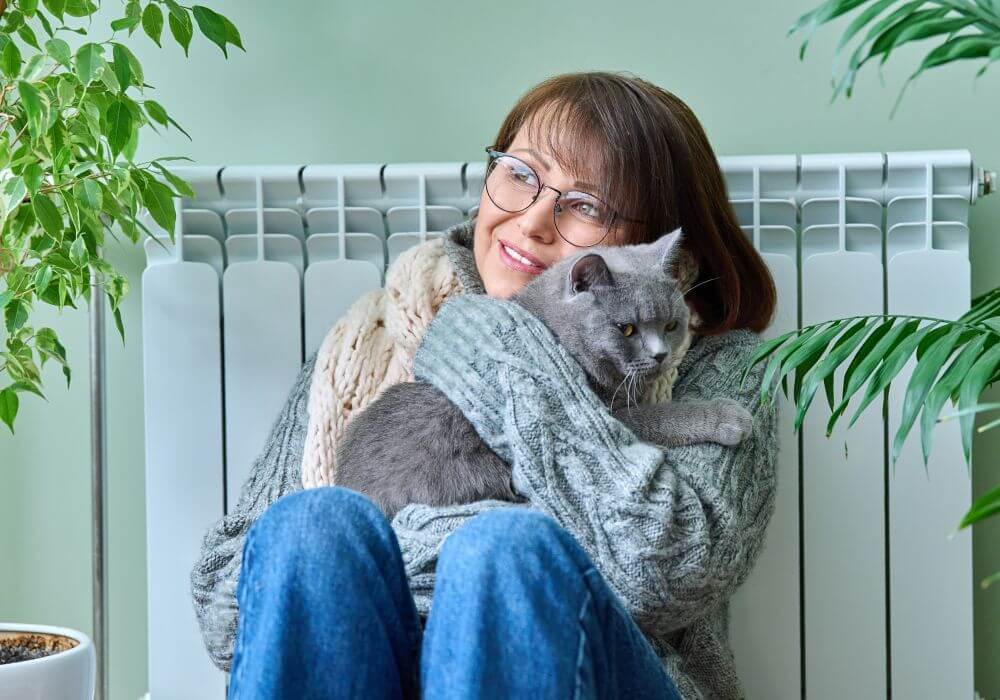
If you have noticed that your dog stays closer when you are irritated, or that your cat curls up on you exactly when you feel anxious, it is not your imagination. Pets can truly sense your hormonal shifts, emotions, and even stress levels.
Understanding how they do this is more than just a matter of curiosity: it can help you lean into your bond with them during this transition, transforming that connection into a daily source of wellbeing.
Do Animals Really Detect Our Hormonal and Emotional Changes?
The short answer: yes, and with surprising precision.
Science has shown that, in the context of pets and menopause, dogs and cats can detect subtle changes in:
- Your body odor (including chemical hormonal shifts)
- Your tone of voice
- Your posture and subtle gestures
- Your heart rate
- Your breathing patterns
- Your stress levels
This means that when you enter perimenopause and your hormones begin to fluctuate, your pet perceives it even before you are fully aware of it yourself.
Studies have revealed that dogs are capable of detecting chemical changes in human sweat related to emotional stress through their sense of smell—even when the person is trying to hide their outward signs.
Similarly, research has shown that cats can recognize emotional states in people by observing micro-gestures and variations in vocal tone.
During menopause, when stress, irritability, and anxiety are common symptoms, these biological and behavioral changes become even more noticeable to them.
What Menopause Signals Can Your Pets Perceive?
In the interaction between pets and menopause, animals typically detect three types of changes with remarkable speed:
1. Hormonal Shifts Affecting Your Scent
Fluctuations in estrogen and progesterone subtly modify your body odor. Your dog, whose sense of smell far exceeds human capabilities, perceives these variations immediately.
How might they react?
- Staying closer to you than usual.
- Sniffing you more frequently.
- Watching you with increased attention.
- Seeking physical contact when they detect anxiety.
Cats, although their sense of smell is not as highly developed as a dog’s, also detect these chemical changes and may become more clingy or alter their behavior in response.
2. Changes in Breathing and Heart Rate
Anxiety, hot flashes, and insomnia alter:
- Your breathing patterns.
- The speed of your movements.
- Your overall energy levels.
Your pet interprets these signals as an emotional shift.
To them, it is as if you are sending a silent message: “Something is happening.”
They respond with the tools they have: closeness, companionship, and physical contact.
3. Changes in Your Daily Behavior
Menopause can modify:
- Your sleep patterns.
- Your energy levels.
- Your focus and concentration.
- Your stress tolerance.
- The way you socialize.
Because animals thrive on routines, they may notice your transition even before you do.
For example:
- If you wake up multiple times during the night, your dog feels it.
- If you move less, your cat perceives it.
- If you are more irritable, both will adjust their conduct to either stay close or keep a respectful distance, depending on their unique personality.
Your animals read your body and your emotions with a sensitivity that sometimes surpasses that of other people.
How Do Your Pets Respond to These Changes?
Every animal reacts in its own unique way, but the most common patterns include:
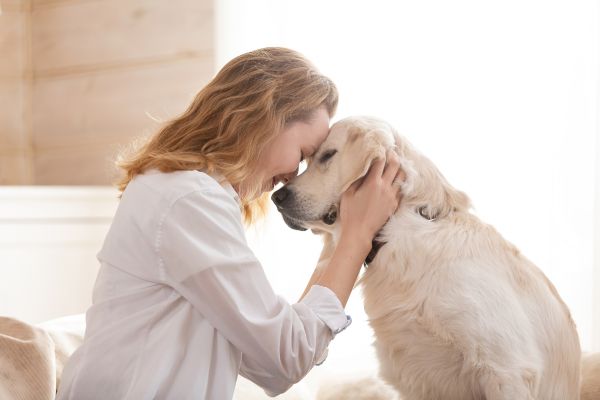
1. An Increased Need to Be Near You
Many dogs and cats will:
- Sit closer to you than usual.
- Follow you throughout the house.
- Seek constant physical contact.
- Observe you more intently.
This isn’t just dependency; it is heightened sensitivity.
2. Protective Behaviors
Dogs, in particular, may:
- Position themselves between you and other people.
- Watch over you more closely.
- Become more alert when they detect your anxiety or sadness.
This is rarely aggression; rather, it is their natural response to what they perceive as your vulnerability.
3. Activating the “Calming Effect” or Emotional Co-regulation
Animals can act as natural regulators for your nervous system.
When you pet your dog or cat:
- Your cortisol (stress hormone) levels drop.
- Your oxytocin (the wellbeing or bonding hormone) increases.
- Your breathing stabilizes.
- Muscle tension is reduced.
And the most beautiful part: oxytocin levels increase in them as well, creating a shared emotional bond that benefits both species.
How to Leverage the Connection Between Pets and Menopause to Boost Your Wellbeing
Your pets can become your physical, emotional, and cognitive allies. Here are some practical ways to integrate the pets and menopause connection into your self-care routine:
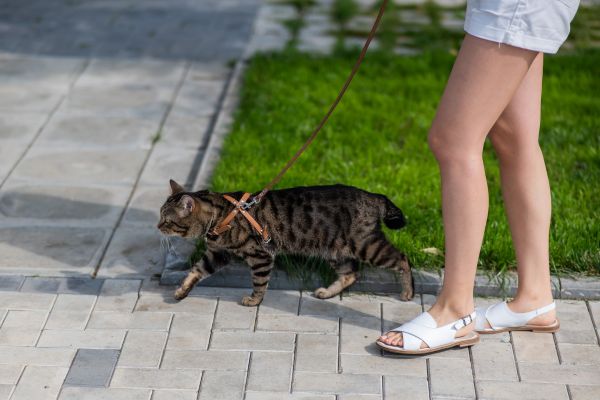
1. Therapeutic Walks (Even Short Ones)
It’s not about walking miles; it’s about using the walk as:
- A stress regulator.
- Gentle physical stimulation.
- A pathway to better sleep.
- Consistent activity for bone health.
Just 10 minutes can make a real difference.
2. Shared Routines for Stability
Routines help your brain feel safe, and animals thrive on them.
Combining both creates a powerful emotional structure.
Try the following:
- Gentle play at the same time each day.
- Daily grooming/brushing sessions.
- Short periods of conscious affection.
- Consistent feeding schedules.
Predictability calms your nervous system.
3. Mindful Contact Moments
Instead of petting “on autopilot” while checking your phone, try this:
- Take a deep breath.
- Place a hand on their head or chest.
- Follow the rhythm of their breathing.
- Let their calm state influence your own body.
It is like a meditation session guided by your pet.
4. Activities to Boost Mood and Focus
Brain fog can be alleviated through:
- Scent games with your dog: Hide treats in different corners of a room (behind a chair, under a towel) and let them find them. This 5-minute activity activates them and centers you.
- Intelligence games with your cat: Place a ball or treats inside a cardboard box with holes in the top. Watching them use their paws to retrieve them is simple and mentally stimulating for both.
- Learning new tricks together: Teaching your dog to “shake” or your cat to “high-five” provides short, fun exercises that strengthen your bond.
- Environmental Enrichment. For example: For dogs, use a snuffle mat or a box filled with various safe objects for them to explore. For cats, provide a shelf near a window, a simple cardboard box, or toys that move on their own.
These small changes keep your brain and theirs active simultaneously.
When to Pay Closer Attention to Their Behavior
If your pet suddenly changes its conduct, it could be due to:
- High levels of stress within you.
- Prolonged insomnia.
- Periods of intense irritability.
- Muscle pain or fatigue.
This is not meant to alarm you, but rather to encourage you to use their behavior as a signal that your own body needs attention.
Sometimes, your animal detects that you need rest even before you do.
Final Thoughts
When considering the bond between pets and menopause, it is striking that dogs and cats are not just passive observers of the changes you experience; they are active participants.
They perceive your shifts, adjust their behavior, and unknowingly support your emotional wellbeing during a stage where the world can feel unstable.
Leveraging this connection does not only strengthen your bond with them; it also helps you navigate this transition with more calm, companionship, and emotional stability.
To dive deeper into how perimenopause and menopause symptoms can influence your daily life (and how to manage them), you can find more information in this article.
If you are ready to take control and take your first step toward a more conscious and active state of wellbeing, don’t wait any longer. Download our free guide, 5 Keys to Wellbeing in Menopause, and discover simple and effective strategies that will allow you to start feeling better today. The journey toward your new stage begins with information and action.
Written by the MenoPawse Editorial Team and medically reviewed by Dr. Nestor Claveria Centurion.
The information in this article is strictly for educational purposes and does not replace the consultation, diagnosis, or care of a licensed healthcare professional. Always consult your doctor before making any health-related decisions. [See Terms and Conditions of Use]