Do you prefer to listen?
Here’s the audio version:
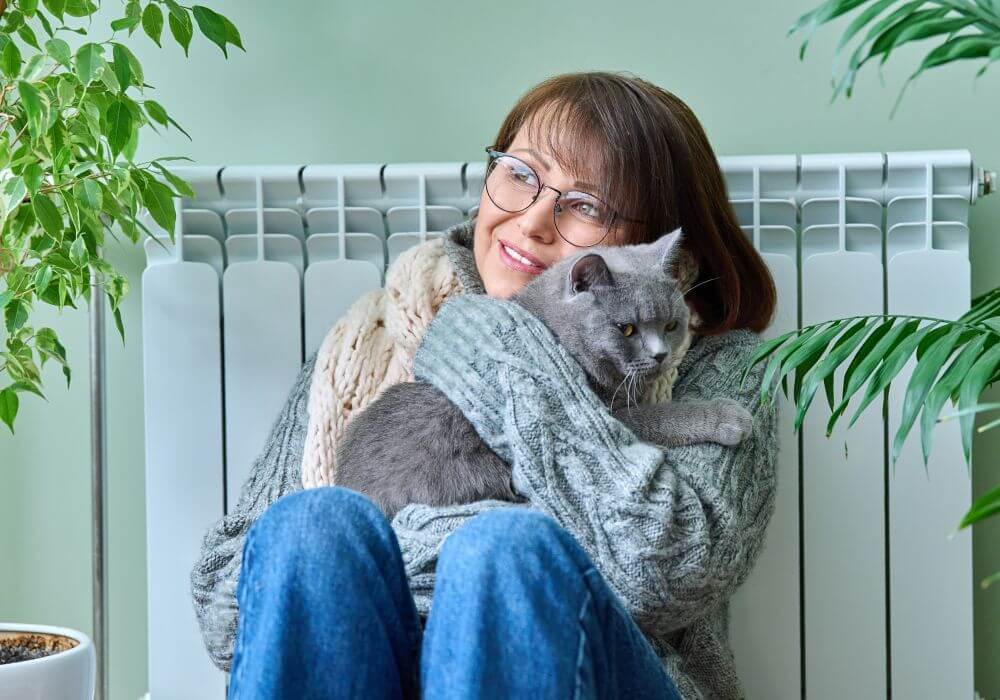
Your relationship with your pet during menopause is not always the same as it was years ago. Many women discover — sometimes with surprise — that this bond becomes deeper, more intentional, and more emotionally meaningful during this stage of life.
Menopause is not only a hormonal transition. It is a profound internal reorganization: of the body, of identity, of sensitivity, and of relationships. And in the midst of that process, your relationship with your pet can take on a different dimension — more intimate, more regulating, more present.
This is not exaggeration. Nor is it simple sentimentality. It has biological, psychological, and relational foundations.
Why your relationship with your pet during menopause may deepen
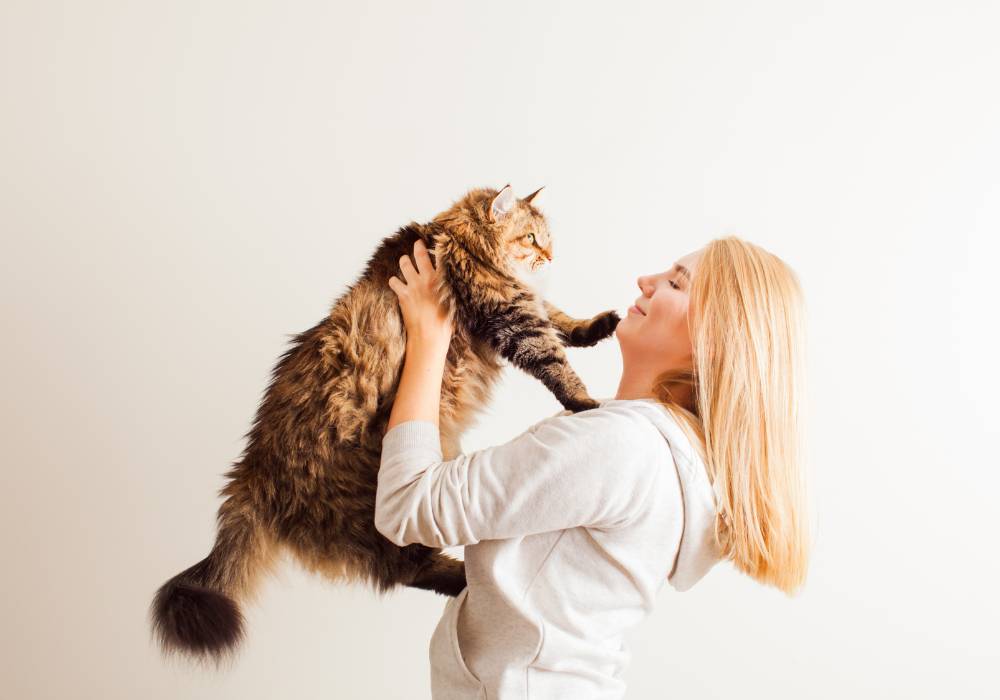
During perimenopause and menopause, fluctuations in estrogen levels influence neurotransmitters such as serotonin and GABA, which play a central role in mood regulation and stress response.
Research has shown that this transition can increase emotional vulnerability and reactivity to everyday situations, particularly when it coincides with significant life changes.
When the nervous system becomes more sensitive, the body seeks regulation. And often, that regulation does not come from rational arguments, but from sensory experiences and safe connections.
This is where your relationship with your pet during menopause may begin to transform.
Emotional regulation and physical contact
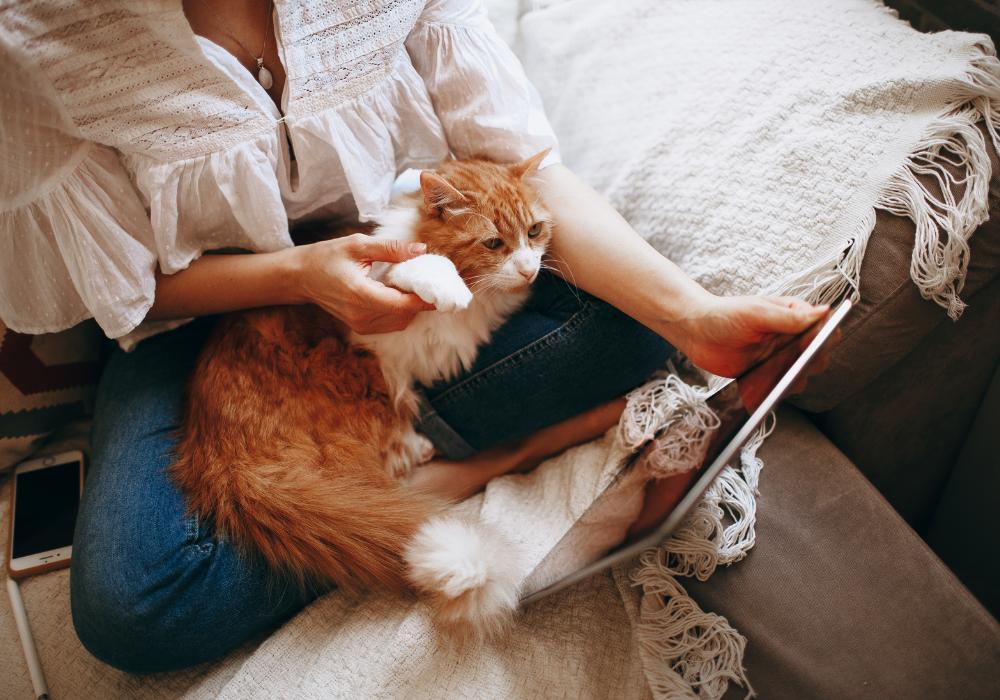
Petting a dog or a cat activates real physiological mechanisms. Human–animal interaction has been associated with lower cortisol levels and increased oxytocin — the hormone linked to bonding and calm.
During menopause, when many women describe internal hyperactivation, difficulty relaxing, or sleep disturbances, these small moments of contact can become genuine regulatory anchors.
The rhythm of your pet’s breathing.
The texture of their fur.
The weight of their body resting against yours.
Your relationship with your pet during menopause can function as a space of co-regulation where your nervous system finds stability without demands or judgment.
Identity transition and the need for stable bonds
Menopause often coincides with profound life shifts:
- Children leaving home.
- Changes within a partnership.
- Professional reassessments.
- Questions about identity and purpose.
It is a stage in which many roles are redefined. And in the midst of that movement, your relationship with your pet can represent continuity.
Your pet does not evaluate your age.
They do not judge your emotional fluctuations.
They do not respond to social ageism.
They respond to your presence.
And that steady presence can become a point of stability when other areas of life feel uncertain.
Secure attachment and emotional wellbeing
We know that secure bonds foster emotional resilience. Although attachment theory traditionally focuses on human relationships, companion animals can also play a regulatory role.
Your relationship with your pet during menopause does not replace human relationships, but it can meaningfully complement your emotional ecosystem.
Especially during a phase when many women report feeling less socially visible, the bond with an animal can offer an experience of unconditional acceptance.
No productivity expectations.
No comparison.
No aesthetic demands.
Just presence.
Greater dependency or greater awareness?
It is natural to wonder whether the intensification of your relationship with your pet during menopause signals dependency.
It is important to differentiate.
Menopause often brings emotional clarity. There is less tolerance for superficial connections and greater appreciation for authenticity. What may appear as increased attachment may actually be increased awareness of the bond.
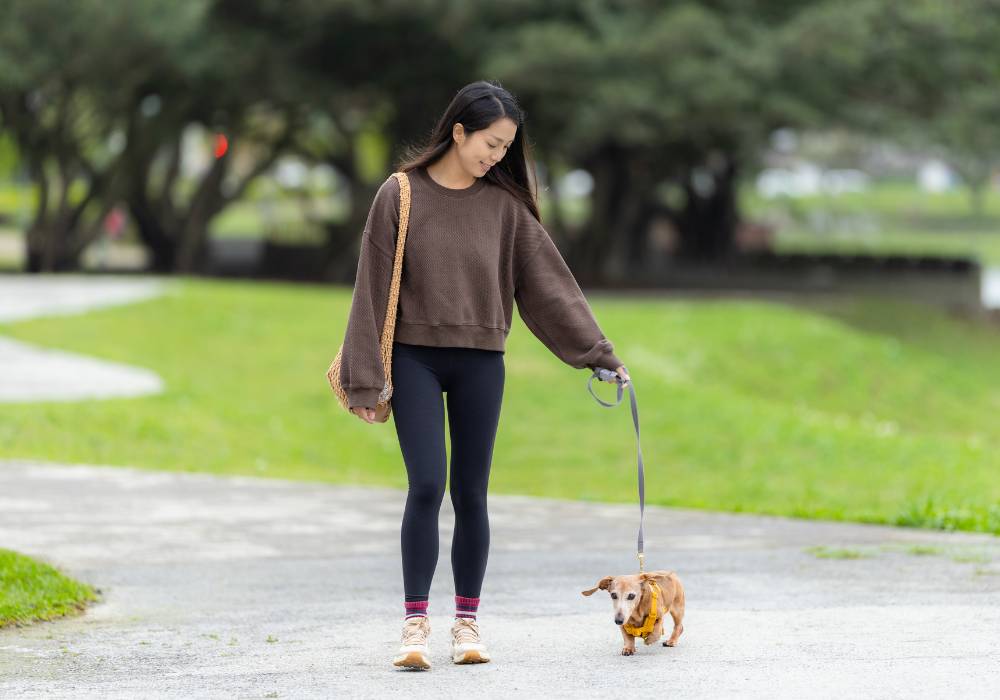
A walk becomes reflective space rather than routine.
Feeding time becomes a pause.
Sharing silence acquires meaning.
This is not regression. It is emotional depth.
Solitude, silence, and shared regulation
There is a form of solitude that is not deprivation but inwardness. Menopause can open that space for introspection.
In that context, your relationship with your pet takes on a particular quality: companionship without intrusion.
It does not demand conversation.
It does not interrupt silence.
But it is there.
Interpersonal neurobiology suggests that emotional regulation can be co-regulation. Often we do not calm ourselves alone; we calm in the presence of another living being who conveys safety.

The transformation of the bond
Perhaps the key word here is not intensity, but transformation.
Your relationship with your pet during menopause may become:
More conscious.
More symbolic.
More integrated into your current identity.
More aligned with your emotional needs.
In earlier stages of life, the bond may have been more playful or practical. Now, it may become contemplative.
It is not that your pet changes. What changes is the way you inhabit the bond.
And that speaks to your internal process.
When the bond becomes support
If you feel that your relationship with your pet during menopause has deepened, it is not an exaggeration.
It aligns with:
- Hormonal reorganization.
- Greater nervous system sensitivity.
- Identity transition.
- The search for more authentic bonds.
Menopause does not only mark the closing of a biological stage. It can also open the door to a more conscious way of relating.
With yourself.
With others.
And with the one who walks beside you — even if they do so on four paws.
If you are ready to take control and take your first step toward a more conscious and active state of wellbeing, don’t wait any longer. Download our free guide, 5 Keys to Wellbeing in Menopause, and discover simple and effective strategies that will allow you to start feeling better today. The journey toward your new stage begins with information and action.
Written by the MenoPawse Editorial Team and medically reviewed by Dr. Nestor Claveria Centurion.
The information in this article is strictly for educational purposes and does not replace the consultation, diagnosis, or care of a licensed healthcare professional. Always consult your doctor before making any health-related decisions. [See Terms and Conditions of Use]