Do you prefer to listen?
Here’s the audio version:
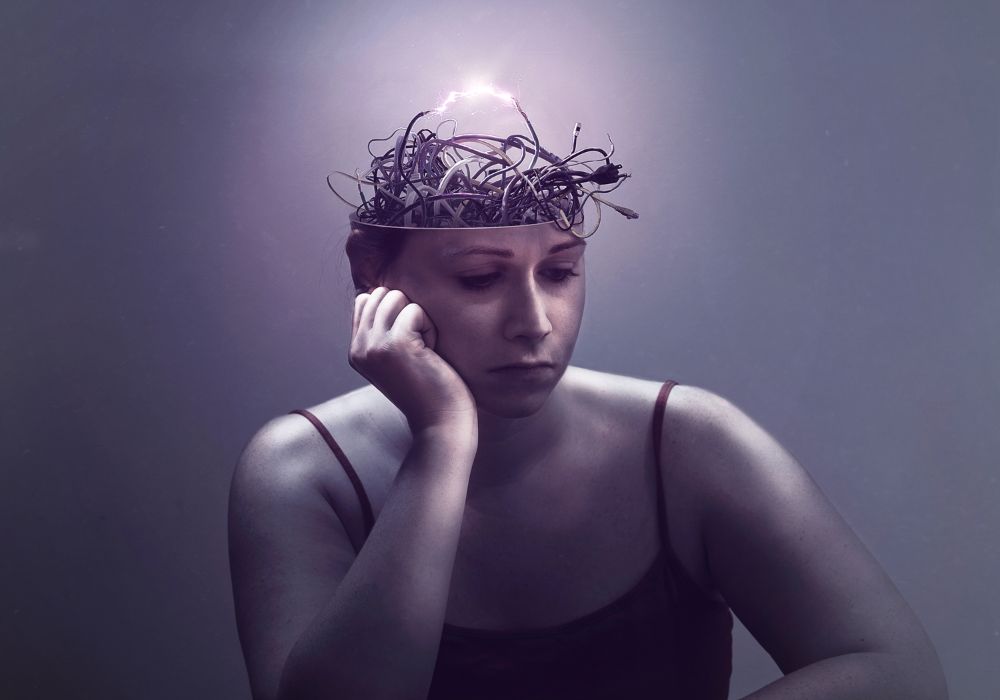
There is a scene many women never describe out loud.
One day you walk into a room and something feels different. No one is rude. No one is openly dismissive. It’s subtler than that. Harder to name.
You simply notice… you are no longer looked at in the same way.
It doesn’t happen overnight. It’s gradual. A faint sensation that settles in, as if you were slowly becoming invisible.
That is where menopause and female ageism begin to intersect.
Menopause is a biological transition. Ageism is a social construct. But when they converge in the same life stage, they can hurt in ways that are difficult to articulate.
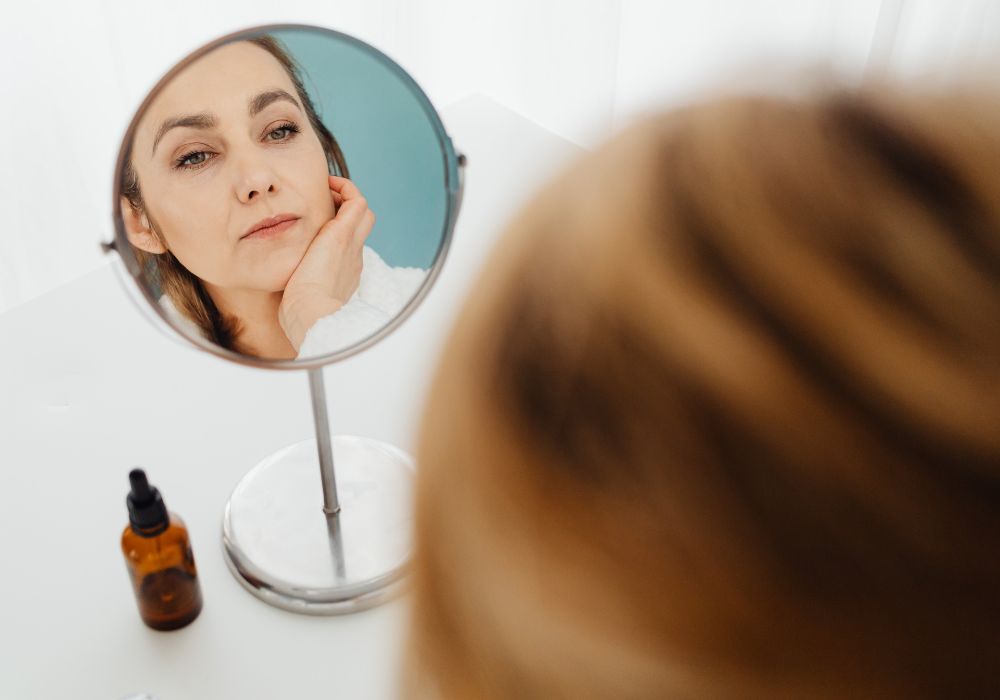
When the mirror no longer reflects the same story
For many women, the first signal is not a hot flash or insomnia.
It’s something quieter.
A comment about “looking good for your age.”
A promotion given to someone younger.
An awkward silence when desire is mentioned, as if it were no longer a subject that belongs to you.
Menopause and female ageism do not always arrive dramatically. Sometimes they arrive like fog.
Research published by the American Psychological Association has examined how age-based discrimination disproportionately affects women, linking aging with diminished social and professional value.
Additionally, a review has explored how internalized negative stereotypes can produce self-fulfilling prophecies through stereotype embodiment and contribute to feelings of weakness and dependency.
These studies suggest that aging is not judged neutrally. It is filtered through gendered expectations.
When menopause occurs within that cultural framework, it can feel like a double transition: hormonal and symbolic.
The quiet pain of feeling less visible
What makes menopause and female ageism so complex is that the pain is often invisible.
It is not a diagnosis.
Not a symptom you can describe during a medical appointment.
It is more like a question that begins to surface:
“Am I still relevant?”
That question hurts because, for many years, you never had to ask it.
Youth is automatically validated. When that validation shifts, a space opens. And not everyone knows how to fill it.
Some women feel it in the workplace.
Others in their intimate relationships.
Others in the absence of midlife female representation in media and culture.
Even if no one says it directly, the cultural narrative can whisper: “Your best years are behind you.”
This is where menopause and female ageism become dangerous if left unquestioned.

It is not just biology
Yes, menopause brings real hormonal changes. The body shifts. The skin shifts. Metabolism shifts.
But what hurts is not only the biology.
What hurts is the assumption that these changes equal loss.
Yet psychological research consistently shows that midlife can be associated with improved emotional regulation, greater psychological resilience, and enhanced wellbeing compared to earlier adulthood.
In fact, longitudinal findings suggest that many adults report higher life satisfaction and emotional stability as they age, even while facing physical changes.
This creates a striking contradiction.
While the external world may subtly reduce your visibility, your internal world may actually be strengthening.
Menopause and female ageism exist in that tension: at the very moment many women gain clarity and firmer boundaries, the system pushes them toward the margins.
When you start silencing yourself
One of the least discussed effects of menopause and female ageism is self-censorship.
You might begin to wonder:
“Is it ridiculous to dress like this now?”
“Is it inappropriate to speak up about this?”
“Should I behave more ‘appropriately’ for my age?”
Without noticing, you make yourself smaller.
Not because you want to.
But because you learned that discretion is a survival strategy.
However, forced discretion is not elegance. It is adaptation to fear.
Breaking the script of invisibility begins with noticing when you are shrinking your voice to meet someone else’s expectations.
The experience no one can erase
There is something ageism cannot take away: lived experience.
Women moving through menopause are not diminished versions of themselves. They are expanded ones.
They have navigated loss.
Built relationships.
Worked, cared, learned, fallen, rebuilt.
Menopause and female ageism attempt to compress that history into a single label: “older woman.”
But a life does not fit inside a label.
Many women describe this stage as the moment they stop tolerating what they once accepted:
Unbalanced relationships.
Unreasonable demands.
Unrealistic standards.
That is not decline.
It is discernment.
From pain to redefinition
Acknowledging invisibility does not mean surrendering to it.
It hurts to be overlooked in a meeting.
It hurts when cultural references disappear.
It hurts when mature female desire is treated as an anomaly.
Menopause and female ageism can touch deep emotional layers because they challenge identity.
But they can also mark a threshold.
A threshold between living according to an inherited script or writing a new one.
Breaking invisibility does not always mean becoming louder.
Sometimes it simply means not apologizing for taking up space.
Speaking when you want to speak.
Dressing how you choose.
Claiming your right to desire, ambition, creativity, and wellbeing.

Chosen presence
There is a profound difference between being made invisible and choosing your level of exposure.
Menopause and female ageism may exist in the social environment, but they do not have to define your internal narrative.
You may no longer receive automatic validation in the way you did at twenty-five.
But you can build something more stable: validation rooted in self-knowledge.
And that form of visibility does not depend on external gazes.
An honest question
Perhaps the real question is not:
“Am I losing value?”
But rather:
“What part of my identity depended on being seen in a certain way?”
Menopause and female ageism confront us with that uncomfortable reflection. They also offer the opportunity to answer it with greater honesty than ever before.
The goal is not to fight every instance of ageism.
The goal is not to internalize it.
Because the most dangerous invisibility is not social.
It is the invisibility we accept without questioning.
And that is one we can break.
If you are ready to take control and take your first step toward a more conscious and active state of wellbeing, don’t wait any longer. Download our free guide, 5 Keys to Wellbeing in Menopause, and discover simple and effective strategies that will allow you to start feeling better today. The journey toward your new stage begins with information and action.
Written by the MenoPawse Editorial Team and medically reviewed by Dr. Nestor Claveria Centurion.
The information in this article is strictly for educational purposes and does not replace the consultation, diagnosis, or care of a licensed healthcare professional. Always consult your doctor before making any health-related decisions. [See Terms and Conditions of Use]