
If you’ve arrived at menopause without anyone having clearly explained what estrogens are, that’s not an accident. For decades, education about the hormonal workings of the female body has been, at best, incomplete.
The result is that many women reach this transition feeling blindsided: symptoms they didn’t expect, changes they don’t understand, a sense that their body has started acting on its own without warning them.
Understanding what estrogens are and what they do won’t eliminate those symptoms. But it can change how you interpret them, and sometimes that’s enough to stop feeling like something is failing.

What Estrogens Are: More Than Reproductive Hormones
Estrogens are steroid hormones produced primarily in the ovaries, with smaller amounts made in the adrenal glands and, during pregnancy, in the placenta. They are the main female sex hormones, but calling them simply “reproductive hormones” understates their role considerably.
There are three main types of estrogens in the human body. Estradiol is the most potent and the most abundant during the fertile years: the one that influences most of the processes described below. Estriol is produced mainly during pregnancy. And estrone is the type that predominates after menopause, produced in smaller amounts and with weaker effects.
When we talk about the drop in estrogens during menopause, we’re talking essentially about the drop in estradiol.
What Estrogens Do in Your Body
This is the part that surprises most women: estrogens don’t only act on the reproductive system. They act on virtually every organ and system in the body, because almost every cell in the female organism has receptors for these hormones.
This explains why, when estrogen levels fall, the effects are felt in so many places at once.
In the Brain
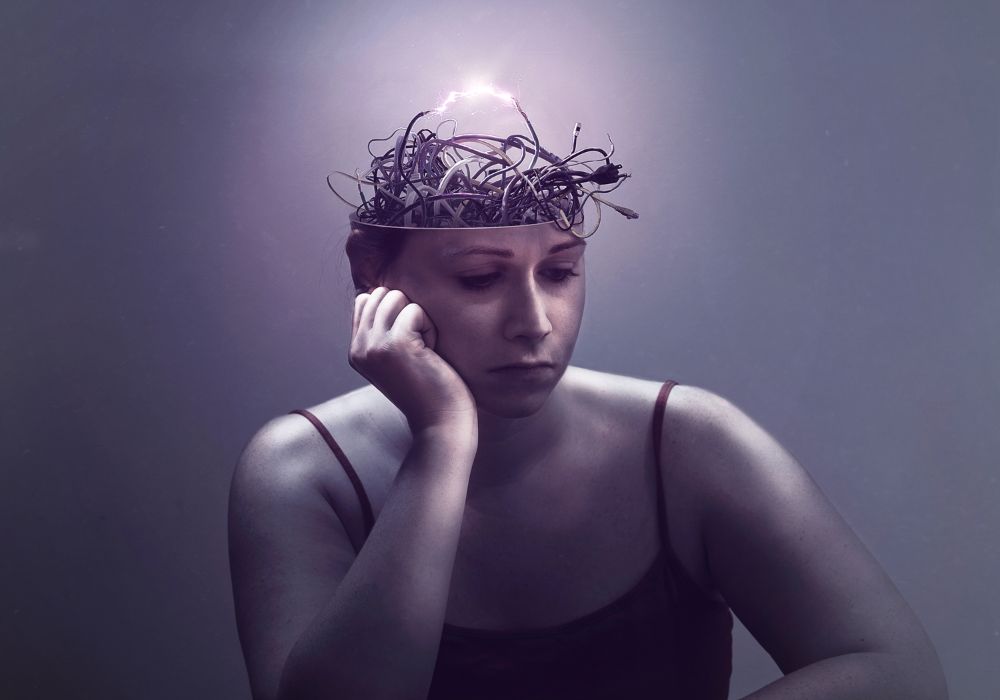
Estrogens have a notable impact on brain health: they modulate the production of serotonin, dopamine, and noradrenaline, the neurotransmitters responsible for mood, motivation, memory, and concentration. They also influence sleep regulation and the stress response.
This is why, when their levels fall, mood changes, brain fog, anxiety, or difficulty sleeping can appear with no obvious emotional cause.

In the Bones
Estrogens are fundamental to maintaining bone density: they regulate the balance between the cells that build bone and those that break it down. Without their protective effect, that balance breaks, and bone is lost faster than it can be regenerated.
Reduced bone mineral density is one of the most well-documented effects of falling estrogen and can lead to osteoporosis if preventive steps aren’t taken.
In the Heart and Blood Vessels
Estrogens have a protective effect on the cardiovascular system: they support a healthy lipid profile, reduce vascular inflammation, and help maintain arterial elasticity.
When estrogen levels fall, LDL cholesterol tends to rise while HDL decreases, disrupting the lipid metabolism that had previously been more favorable. This contributes to a less favorable environment for cardiovascular health.
It’s no coincidence that the risk of cardiovascular disease increases in women after menopause.
In the Skin
Estrogens stimulate the production of collagen and hyaluronic acid, maintain skin hydration, and support cell renewal.
Their decline explains the loss of firmness, increased dryness, and more pronounced wrinkles that many women notice during perimenopause and menopause.
In the Muscles
These hormones also participate in muscle protein synthesis. Without their effect, muscle breaks down faster than it can be rebuilt.
This contributes to the loss of muscle mass characteristic of this transition, and is one of the reasons why strength training and adequate protein intake matter so much at this stage.
In the Pelvic Floor and Urogenital System
Estrogens maintain the elasticity of the vaginal and urethral mucosa, the tone of the pelvic floor, and the blood supply to the area.
When their levels fall sharply, vaginal dryness, greater vulnerability to infections, and a weakening of the continence mechanisms can appear.
In the Metabolism
Estrogens regulate how the body distributes and processes fat.
When their levels drop, fat tends to accumulate in the abdomen rather than the hips and thighs, and insulin sensitivity may decrease.
In the Gut
Estrogens and the gut share a closer relationship than is usually acknowledged. The gut plays an active role in processing and eliminating estrogen the body no longer needs: a balanced gut microbiome helps metabolize and excrete that excess efficiently.
When the gut isn’t functioning well, that process slows. Estrogen may be reabsorbed rather than eliminated, which can disrupt hormonal balance and intensify symptoms such as mood changes or heavier, more irregular periods during perimenopause.
In turn, hormonal fluctuations also affect the gut: many women notice an increase in digestive symptoms during perimenopause, including bloating, constipation, diarrhea, and reflux. That’s not coincidence. It’s another expression of the same two-way conversation between hormones and the digestive system.
If you want to understand more deeply how estrogen influences the heart, brain, bones, and long-term health, Estrogen Matters by Dr. Avrum Bluming and Carol Tavris is one of the most evidence-based and clearly written books on the subject. The 2024 revised edition brings the science fully up to date.
How Estrogen Levels Fall During Menopause
The ovaries contain a finite reserve of follicles, the structures that produce estrogens and eggs. Over time, that reserve depletes.
During perimenopause, estrogen levels don’t fall in a straight line: they fluctuate, sometimes chaotically. One month they may be high; the next, low. That irregularity is what produces many of the most disorienting symptoms of this stage: irregular menstrual cycles, sudden mood shifts, hot flashes that come and go. The body isn’t in a constant descent; it’s in an intense oscillation before the final drop.
Menopause is defined as the point at which twelve months have passed without a period. By then, the ovaries have drastically reduced their estradiol production. Hormone levels stabilize at much lower values, and symptoms that were tied to fluctuation tend to shift in character: some ease, others settle in.
In postmenopause, the body continues producing small amounts of estrogen through the adrenal glands and through fatty tissue, which can convert androgens into estrone. This is why body fat carries some hormonal relevance after menopause, though its output is insufficient to replace what the ovaries once produced.

Why Understanding This Matters
Knowing what estrogens are and what role they play doesn’t make menopause simple. But it does help you read your own body differently.
When brain fog appears, you know there’s a neurobiological basis. When the skin changes, you know why. When sleep fragments, when muscle gives way, when desire fluctuates, when joints ache more: all of it has an explanation that isn’t “you’re getting older” or “it’s all in your head.”
It’s physiology. And physiology, even when it can’t always be addressed immediately, can at least be understood.
Many of the articles you’ll find on MenoPawse — on insomnia, nutrition, muscle mass, the pelvic floor, skin, mood, or exercise — share the same thread: estrogens, what they do, and what changes when they stop doing it.
This article is a starting point for reading them with more context.
If you are ready to take control and take your first step toward a more conscious and active state of wellbeing, don’t wait any longer. Download our free guide, 5 Keys to Wellbeing in Menopause, and discover simple and effective strategies that will allow you to start feeling better today. The journey toward your new stage begins with information and action.
Affiliate Disclosure: Some resources mentioned in this article may contain affiliate links. If you choose to purchase through them, MenoPawse may earn a small commission at no additional cost to you. We only recommend resources that we believe may provide genuine value to our readers. For more information, please see our Affiliate Disclosure page.
Written by the MenoPawse Editorial Team and medically reviewed by Dr. Nestor Claveria Centurion.
The information in this article is strictly for educational purposes and does not replace the consultation, diagnosis, or care of a licensed healthcare professional. Always consult your doctor before making any health-related decisions. [See Terms and Conditions of Use]
Comments
very informative.
thanks for the information.



Thanks for your comment. We hope you find this information helpful in navigating the changes that come with this stage…