If you share your life with a female dog who’s getting on in years, you’ve probably wondered at some point whether she goes through something similar to what you’re experiencing. Whether her body changes. Whether her cycles shift. Whether what happens to her has a name, and if so, whether it’s the same name as what’s happening to you.
The short answer is that your female dog’s menopause doesn’t work like yours. But the full answer is more interesting: her body does change with age, those changes have a real hormonal basis, and understanding them can help you care for her better during this stage of her life.
Your Female Dog’s Menopause: Why It’s Not the Same as Yours
Female dogs don’t go through menopause in the strict sense. In women, menopause marks the permanent end of ovulation: the ovaries exhaust their follicle reserve and estrogen levels fall irreversibly.
In female dogs, that closing point doesn’t exist. Their ovaries don’t have a finite reserve in the same way, and technically they can continue going into heat throughout their lives. There is no moment when the reproductive system shuts down completely.
But — and this is the important nuance — the fact that it doesn’t shut down doesn’t mean it doesn’t change.
What Actually Changes in Your Dog’s Body as She Ages
From around seven or eight years old, depending on breed and size, a female dog’s reproductive cycle begins to shift in ways that are observable if you know what to look for.
Cycles Become Less Regular and Further Apart
A young female dog comes into heat approximately every six to seven months, with fairly predictable regularity. As she ages, that interval can stretch: some cycles take more than a year to arrive, others come sooner than expected. The predictability fades.
According to the MSD Veterinary Manual, the interval between estrous cycles in adult dogs can range from four to thirteen months, with an average of seven, but that variability tends to increase with age.
Fertility Decreases
Eggs are less viable, implantation becomes more difficult, and the risk of complications during pregnancy and whelping increases.
An older female dog can still become pregnant, but doing so carries real health consequences for her.
Heat Cycles May Become Less Noticeable
Discharge can be scantier or shorter in duration, and male dogs may show less interest.
In some cases, heat cycles pass almost unnoticed by the owner, which can lead to confusion about whether the cycle has stopped entirely or is simply less visible.
Behavior May Shift
Some older female dogs show more anxiety, restlessness, or pronounced mood changes around their cycles. Others seem to move through them with less intensity than when they were young.
There is no single pattern: it depends on the individual dog, her breed, and her reproductive history.
The Condition Most Worth Knowing About: Pyometra
If there is one thing every person caring for an older unspayed female dog needs to know, it’s pyometra.
Pyometra is a serious uterine infection that occurs when bacteria take advantage of hormonal changes in the cycle to colonize uterine tissue. After each heat, progesterone primes the uterus for a possible pregnancy: the uterine glands become active, the lining thickens, and the environment becomes more hospitable to bacteria. If no pregnancy occurs and the cycle repeats many times over the years, the tissue deteriorates and vulnerability to infection increases.
Pyometra is most common in middle-aged to older unspayed females, particularly from five or six years onward, and is especially frequent in the weeks following a heat cycle.
It presents in two forms. In open pyometra, the cervix is open and there is visible discharge, which makes detection easier. In closed pyometra, there is no discharge and symptoms are more diffuse: lethargy, loss of appetite, increased thirst and urination, fever. In some cases, there are no obvious signs until the situation becomes urgent.
Left untreated, pyometra can be fatal due to sepsis, uterine rupture, or kidney failure. This is why it’s considered a veterinary emergency.
The safest treatment is surgical: removal of the uterus and ovaries. In very selected cases a medical approach may be attempted, but the risk of recurrence is high.
Knowing about this condition isn’t alarmism. It’s one of the most concrete reasons why regular veterinary monitoring is essential for older unspayed females.
Signs That Warrant Veterinary Attention
Beyond pyometra, there are other signs worth watching for in an aging female dog that may relate to her hormonal cycle or to more general age-related changes:
- Heat cycles arriving very late or seemingly not arriving at all.
- Marked behavioral changes around the cycle: more anxiety, more clinginess, more irritability, or the opposite, more withdrawal.
- Vaginal discharge outside the usual heat period.
- A noticeable increase in thirst or urination frequency.
- An abdomen that appears more distended than usual.
- Loss of appetite or energy that doesn’t respond to obvious causes.
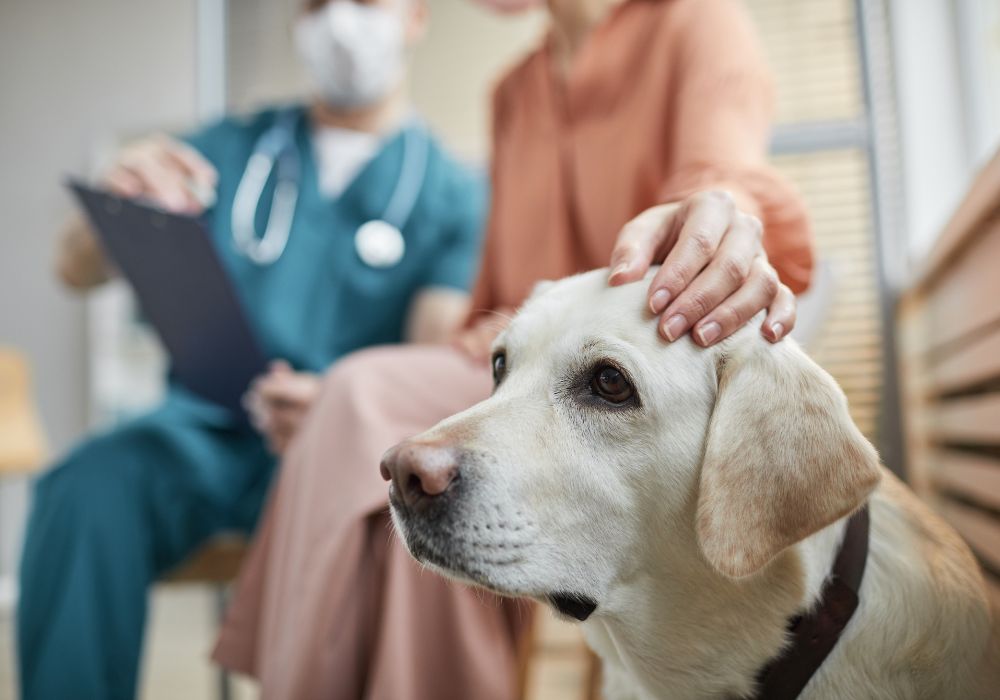
None of these symptoms is automatically serious, but all of them deserve to be evaluated by a veterinarian, particularly in unspayed females over six or seven years old.
The Question of Spaying
If your dog isn’t spayed and she’s getting on in years, the question of whether to spay her now may have crossed your mind.
It’s a decision that depends on several factors: her overall health, her age, her reproductive history, and the assessment of a trusted veterinarian. Spaying older dogs carries a somewhat higher anesthetic risk than spaying young ones, but for many it remains the safer long-term option, particularly when the risk of pyometra is significant.
What is clear is that spaying eliminates that risk entirely. A spayed female dog cannot develop pyometra, has no hormonal cycles, and her body is no longer exposed to the repeated fluctuations that, over years, increase the vulnerability of uterine tissue.
How to Care Well for Your Dog as She Ages
Your female dog’s menopause may not exist as such, but the aging of her body does require specific attention. Beyond the reproductive, a dog reaching eight, ten, or twelve years needs certain things that aren’t always fully considered.
More Frequent Veterinary Check-Ups
Once a year may not be enough for an older dog.
Two annual visits allow changes to be caught early, the condition of the uterus to be monitored if she isn’t spayed, and diet or management to be adjusted according to what her body is asking for.
A Diet Adapted to Her Stage
Nutritional needs change with age. Metabolism slows, muscle mass tends to decrease, joints need more support.
Senior dog foods take these changes into account, though the best guidance will always come from a veterinarian familiar with each individual dog’s health history.
Movement: Adapted, Not Removed
An older dog still needs to keep moving, just perhaps differently than when she was young.
Daily walks remain fundamental, for both her physical health and her emotional balance. The intensity can be adjusted; the consistency should not be.
Attention to Behavioral Changes
Older female dogs may become more sensitive, more dependent, or, conversely, more withdrawn.
Those changes deserve attention: they sometimes reflect undetected chronic pain, hormonal shifts, or simply the natural process of aging, which also requires adaptation and attentiveness on our part.
If you’d like a comprehensive, evidence-based resource to help you navigate your aging dog’s changing needs, Complete Care for Your Aging Dog, by Amy Shojai, covers everything from reproductive health and nutrition to behavior and mobility in older dogs, drawing on input from over 100 veterinary specialists; a genuinely useful companion for this stage.
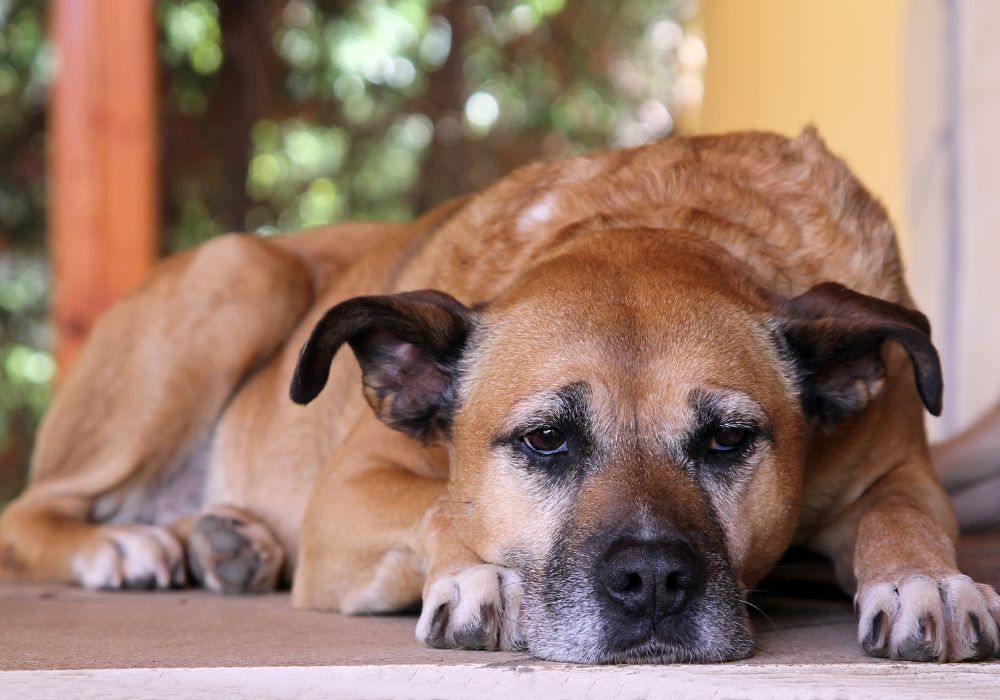
What You and Your Dog Share Right Now
Perhaps the most interesting thing about all of this is what lies beneath the question that gives this article its name.
When someone going through menopause wonders whether her dog goes through something similar, she isn’t only looking for veterinary information. She’s looking, in some way, for company during the process: a way of sharing what she’s living through with the being who is closest to her.
Your female dog’s menopause, even if it doesn’t exist in precise biological terms, does exist in that other sense: two bodies aging together, changing together, needing different kinds of care than before.
And caring for each other through that shared stage is no small thing.
If you are ready to take control and take your first step toward a more conscious and active state of wellbeing, don’t wait any longer. Download our free guide, 5 Keys to Wellbeing in Menopause, and discover simple and effective strategies that will allow you to start feeling better today. The journey toward your new stage begins with information and action.
Affiliate Disclosure: Some resources mentioned in this article may contain affiliate links. If you choose to purchase through them, MenoPawse may earn a small commission at no additional cost to you. We only recommend resources that we believe may provide genuine value to our readers. For more information, please see our Affiliate Disclosure page.
Written by the MenoPawse Editorial Team and medically reviewed by Dr. Nestor Claveria Centurion.
The information in this article is strictly for educational purposes and does not replace the consultation, diagnosis, or care of a licensed healthcare professional. Always consult your doctor before making any health-related decisions. [See Terms and Conditions of Use]