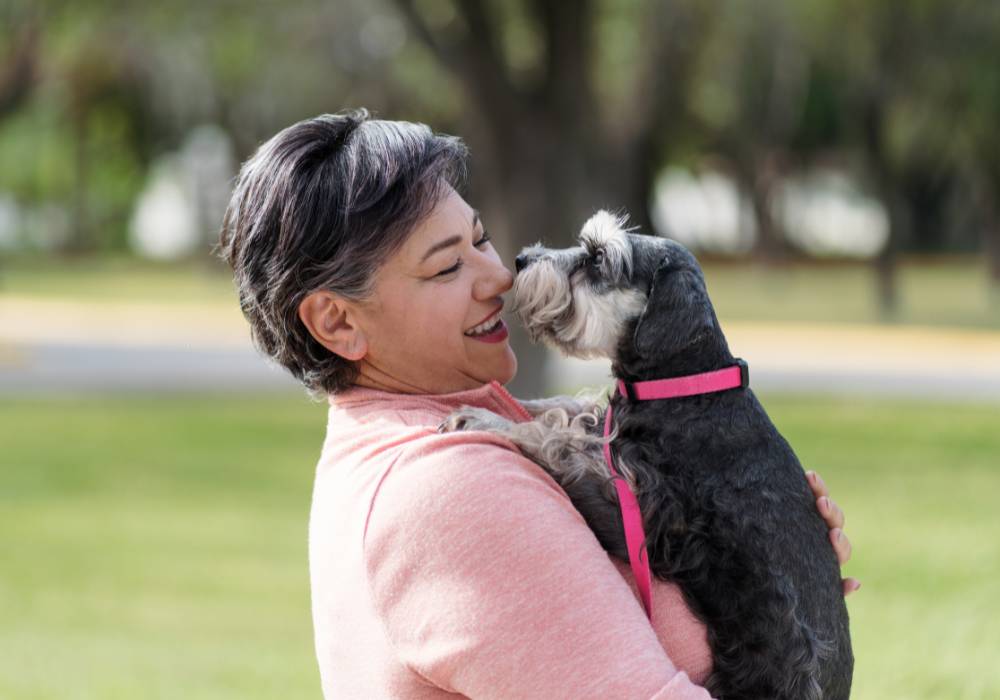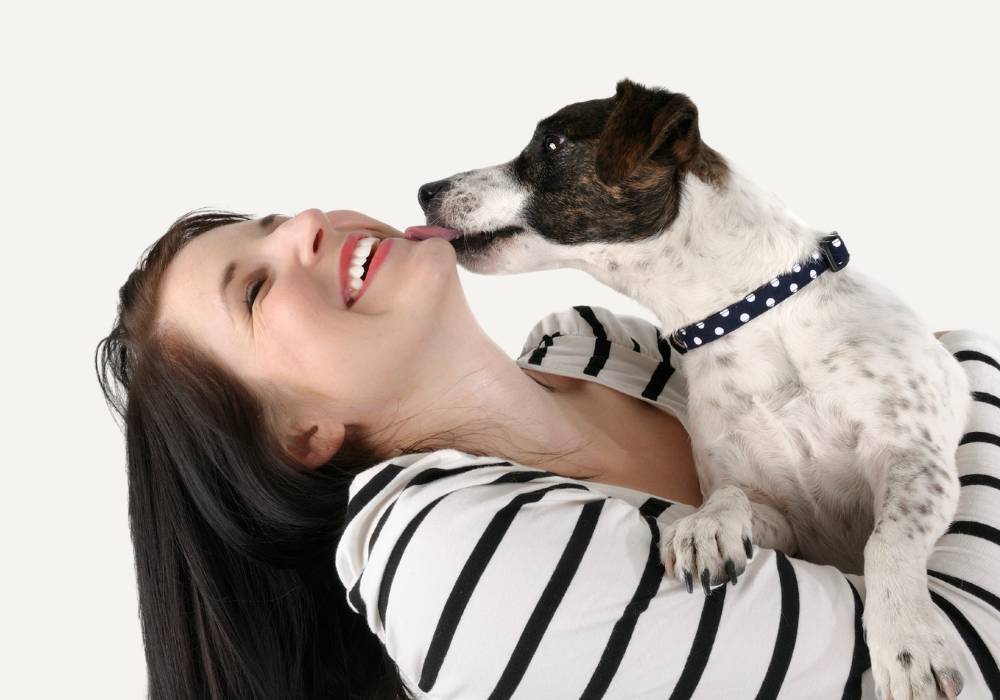
There’s something about the daily walk with your dog that makes it different from any other walk.
It’s not just the movement. It’s that you go out with someone. Someone who sets the pace, who makes you look outward, who stops without warning to smell something and doesn’t ask permission. Someone who knows nothing about your to-do list or what happened yesterday.
For many women going through menopause, that time with the dog becomes one of the few genuine pauses in the day. Not because they planned it that way. But because that four-legged companion doesn’t negotiate schedules, and that inflexibility, which can sometimes feel like an inconvenience, ends up being one of the best things.
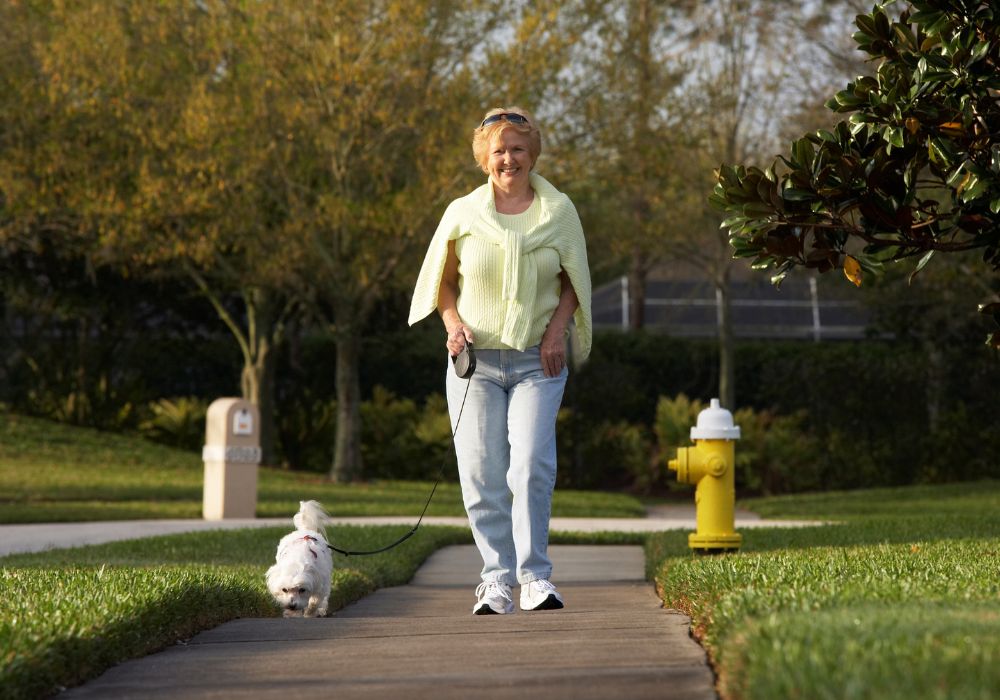
Why the Daily Walk With Your Dog Has a Different Effect Than Walking Alone
Physical exercise has documented benefits for mood, sleep, and general wellbeing during menopause. Nobody argues with that anymore. But the daily walk with your dog activates something additional that walking alone doesn’t produce with the same intensity.
Contact with an animal — even simply walking beside one — triggers the release of oxytocin, the bonding hormone, and reduces cortisol levels. A study from Washington State University showed that petting a dog for just ten minutes is enough to significantly reduce cortisol levels.
During menopause, that combination matters in a particular way. The nervous system during this transition tends to stay in a state of sustained alert. Chronically elevated cortisol contributes to insomnia, anxiety, abdominal fat accumulation, and heightened emotional reactivity.
The daily walk with your dog doesn’t resolve all of that, but it does interrupt that cycle in a concrete, repeated way. And the repetition, here, is the point.
The Routine You Don’t Have to Force Yourself Into
One of the most common difficulties during menopause is maintaining self-care habits when energy fluctuates, when fatigue accumulates, and when motivation doesn’t quite reach what you know would do you good.
The daily walk with your dog solves that problem in a way no habit-tracking app can replicate: the motivation comes from outside.
The dog waits. But eventually, the dog insists. The dog doesn’t understand bad days. And that gentle pressure — no judgment, no expectations, no drama — gets you out the door when you otherwise wouldn’t have gone.
Research on the human-animal bond is still a relatively young field, but studies have begun to confirm what dog owners sense intuitively: dogs provide comfort and emotional support, encourage social interaction, and give their people a reason to move.
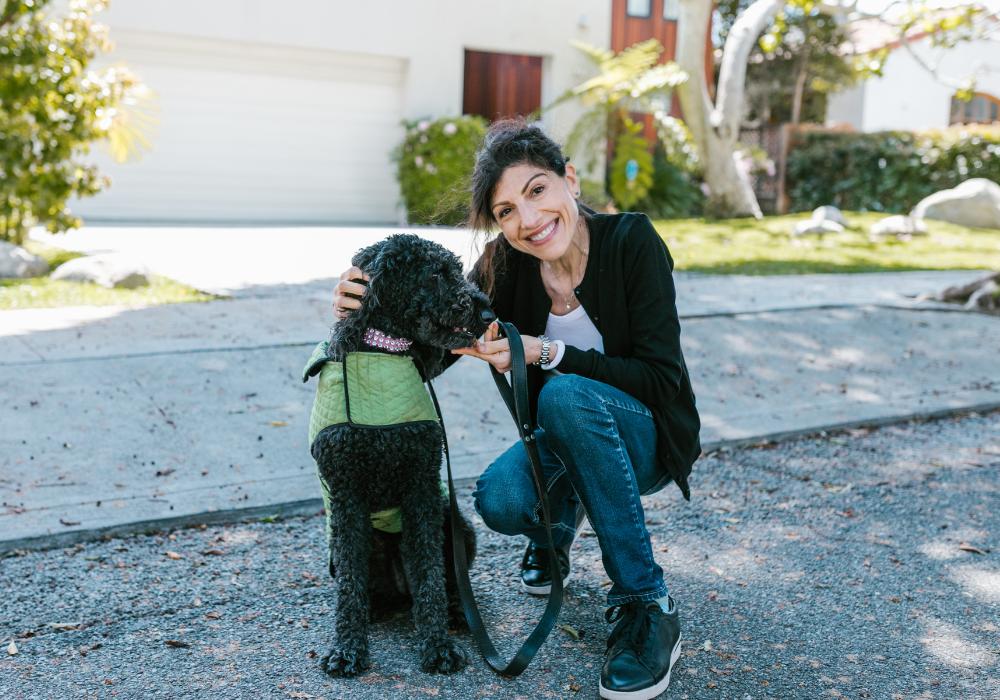
What Happens in Your Body During the Daily Walk With Your Dog
When you go out walking with your dog, several things happen at once, and not all of them are the ones usually mentioned.
Physical movement activates endorphin production and improves circulation. Natural light, especially in the morning, helps regulate the circadian rhythm and supports nighttime sleep, something particularly relevant if insomnia is part of your experience right now.
The shared attention with the dog — noticing what he notices, following his rhythm, staying aware of his behavior — produces a kind of present-moment focus very similar to what mindfulness techniques aim for: the mind steps out of its loop of repetitive thoughts and anchors to what’s happening right now, on this street, with this animal.
And then there’s the physical contact during the walk: the leash in your hand, the animal brushing close as you move, the moment of bending down to greet him. Those small inputs keep the emotional regulation circuit active that the dog’s presence switches on.
If pulling or discomfort tends to turn the walk into a tug-of-war, a well-fitted no-pull harness can make a real difference. The Ruffwear Front Range is consistently one of the most recommended options for comfortable, low-stress daily walks.
The Daily Walk With Your Dog as a Transition Ritual
During menopause, many women describe difficulty switching off at the end of the day. The mind keeps processing after work ends. Worries don’t wait for you to be ready.
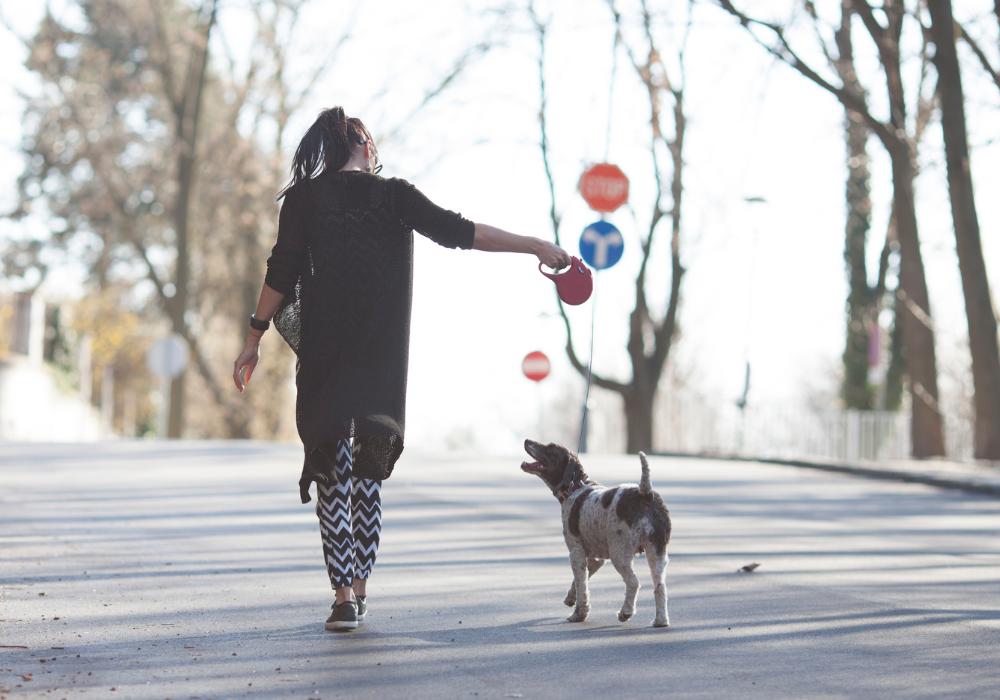
The daily walk with your dog can function as a transition ritual: the time between the outside world and coming home, between the demands of the day and the space of rest.
Not because the dog knows any of that. But because taking him out has a beginning and an end, its own rhythm, and for those few minutes, the only objective is simple: walk with him.
That simplicity, which can easily go unnoticed, may be exactly what the nervous system needs to understand it’s time to start winding down.
What the Walk Isn’t
It’s worth saying this clearly: the daily walk with your dog is not a treatment. It doesn’t replace structured exercise when the body needs it, or professional support when mental health requires more than a walk.
It’s also not a solution for days when exhaustion is deep, or when emotional wellbeing calls for a different kind of attention.
What it is, when practiced consistently, is a low-cost, highly accessible, genuinely beneficial practice. A way to move the body, reduce stress, get outside, and connect with another living being, all in the same stretch of time.
The Daily Walk With Your Dog: Smaller Than It Seems, More Valuable Than It Seems
It doesn’t have to be long. It doesn’t have to be fast. It doesn’t have to happen at the perfect time of day.
The daily walk with your dog can be ten minutes around the block at seven in the morning. A short loop before dark. Coffee in hand, mind still half-awake.
What matters isn’t the distance. It’s the consistency. And the fact that during those minutes, there is someone beside you who asks for nothing more than what they’re offering: presence.
If you are ready to take control and take your first step toward a more conscious and active state of wellbeing, don’t wait any longer. Download our free guide, 5 Keys to Wellbeing in Menopause, and discover simple and effective strategies that will allow you to start feeling better today. The journey toward your new stage begins with information and action.
Affiliate Disclosure: Some resources mentioned in this article may contain affiliate links. If you choose to purchase through them, MenoPawse may earn a small commission at no additional cost to you. We only recommend resources that we believe may provide genuine value to our readers. For more information, please see our Affiliate Disclosure page.
Written by the MenoPawse Editorial Team and medically reviewed by Dr. Nestor Claveria Centurion.
The information in this article is strictly for educational purposes and does not replace the consultation, diagnosis, or care of a licensed healthcare professional. Always consult your doctor before making any health-related decisions. [See Terms and Conditions of Use]