At some point during this stage of life, you may notice something difficult to define.
Your clothes still fit more or less the same. The number on the scale has not changed dramatically. And yet your body feels different. Softer in certain places. Less firm. There is also a kind of fatigue that did not used to be there, as if your body responds with less energy than it once did.
What you are experiencing may be related to muscle mass in menopause.
This process is not inevitable or irreversible. But it is real, it has a clear hormonal basis, and it deserves an honest conversation — one without miracle promises or impossible routines.
What Happens to Muscle Mass in Menopause
Estrogen does far more than most people realize. Among its many functions, it plays a role in muscle protein synthesis — the process through which your body builds and repairs muscle tissue. As estrogen levels decline during perimenopause and menopause, that ability is affected.
The result is that muscle begins to break down faster than it can rebuild itself. Not overnight, but gradually and quietly. Science has a name for this process: sarcopenia, the loss of muscle mass and muscle function associated with aging and hormonal changes.
In women, the menopausal transition appears to accelerate this process significantly. Research has shown that women may lose between 3% and 8% of muscle mass per decade after the age of 30, with a more pronounced decline during menopause.
And there is something important many women do not realize at first: your weight may stay relatively stable while your body composition changes dramatically. Muscle decreases while body fat increases, especially around the abdomen. The scale may not reflect it, but your body notices.
Why Muscle Mass in Menopause Matters Beyond Appearance
Muscle mass in menopause is not only about aesthetics. It is deeply connected to health and quality of life.
Muscle is not simply tissue that helps you move. It is also the body’s primary consumer of glucose, meaning that lower muscle mass contributes directly to insulin resistance and increased cardiovascular and metabolic risk. Muscle is metabolically active tissue that supports joint stability, helps regulate body temperature, and protects bone health.
Less muscle also means less functional strength — the kind you use to open a jar, climb stairs without exhaustion, carry groceries, or simply feel physically capable in everyday life. Its gradual loss often goes unnoticed until suddenly something that once felt easy now requires effort.
There is another important factor as well: muscle mass directly influences mood and energy levels. Muscle activation during exercise releases biochemical signals associated with improved emotional wellbeing and reduced inflammation.
Caring for muscle is not only about caring for the physical body. It is also about supporting emotional wellbeing.
Strength Training: What the Evidence Says
The most effective strategy for slowing and reversing muscle mass loss in menopause is not walking more or adding endless cardio sessions. It is strength training.
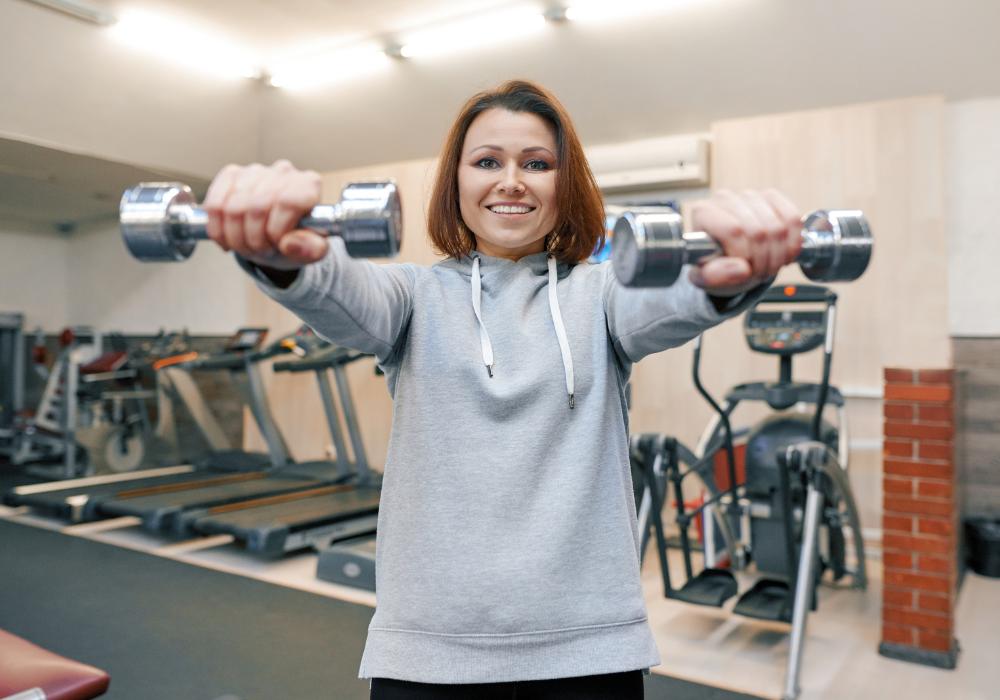
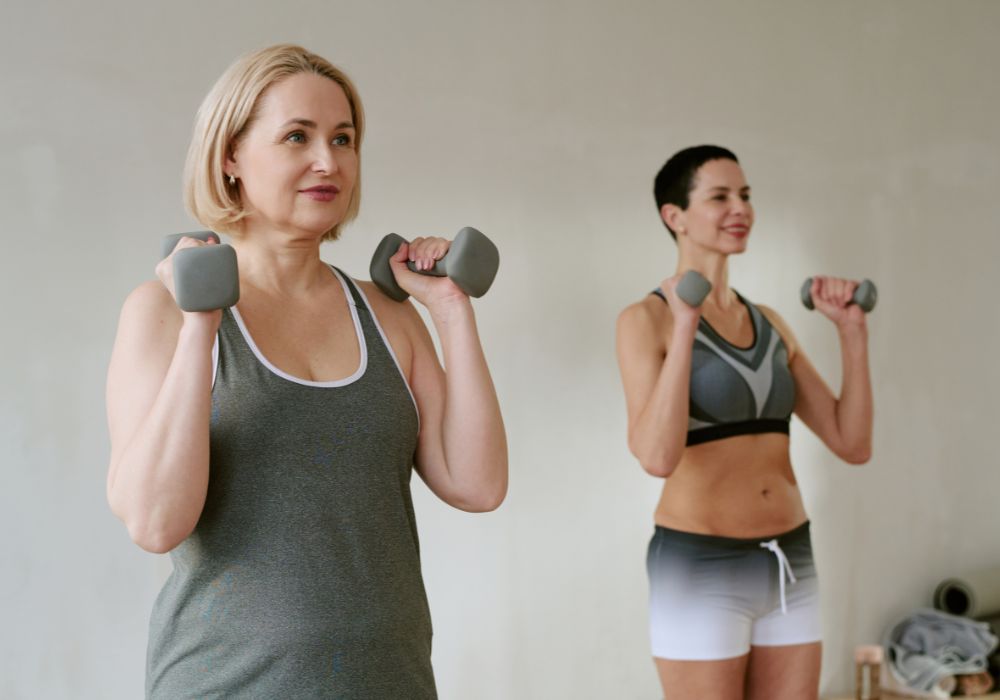
This does not mean becoming an athlete or lifting extremely heavy weights in a gym. It means exposing your muscles to enough resistance that they are forced to adapt and grow stronger. That resistance can come from dumbbells, resistance bands, machines, or even your own body weight. What matters is not the source of the resistance, but the progressive challenge.
Studies examining resistance training in postmenopausal women have concluded that it significantly improves body composition, muscle strength, insulin sensitivity, and bone density.
You do not need to start intensely. Two or three weekly sessions of 30 to 45 minutes focusing on major muscle groups are enough to create meaningful adaptations within a few weeks.
Consistency matters far more than intensity.
Cardio Still Matters — But It Is Not Enough on Its Own
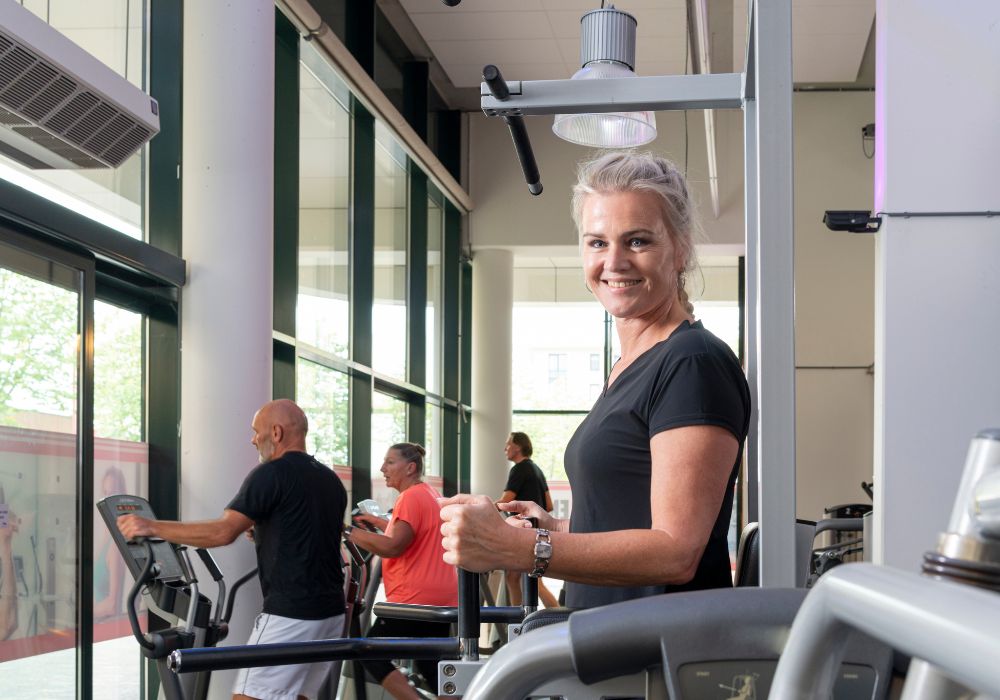
Walking, swimming, dancing, or cycling remain excellent activities for cardiovascular health, sleep quality, and mood regulation. There is no reason to abandon them.
But cardio alone does not sufficiently stimulate muscle protein synthesis. To preserve and rebuild muscle mass in menopause, strength training is essential.
And combining both approaches is what tends to produce the best long-term results.
What Holds Many Women Back
There is a cultural image that associates strength training with bodybuilding, intimidating gyms, or excessively muscular physiques. That image prevents many women from approaching something that could significantly improve their health.
The reality is very different.
After menopause, testosterone levels are relatively low. Developing extreme muscularity does not happen simply because you start doing squats twice a week. What does happen is that muscle becomes firmer, metabolism becomes more active, posture improves, and joints gain stability.
Another common barrier is joint pain or the feeling that the body no longer tolerates exercise the way it once did. But in many cases, the answer is not complete rest. It is adapted movement: starting with lighter loads, respecting recovery time, and progressing gradually.
The body responds remarkably well to stimulus when it is given patience and consistency.
And if you do not know where to begin, even one or two sessions with a qualified trainer familiar with women’s health in midlife can become one of the best investments you make for your future wellbeing.
Nutrition and Muscle: A Relationship You Cannot Ignore
Exercise matters. But it is not enough if nutrition does not support the process.
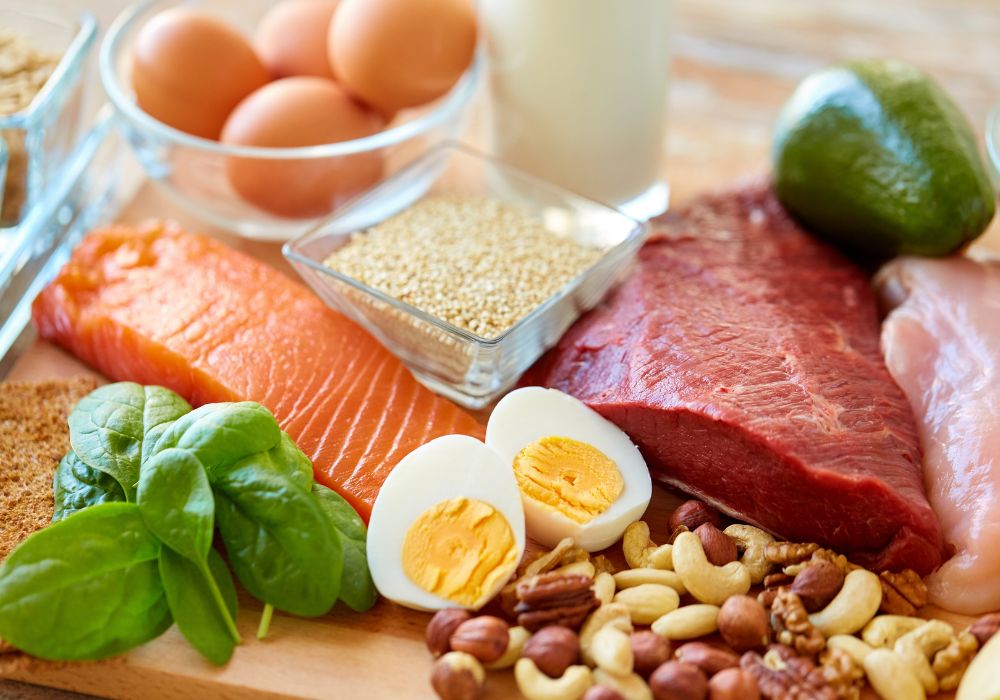
To build and maintain muscle mass in menopause, your body needs adequate protein intake. Current recommendations for midlife and older women generally range between 1.2 and 1.6 grams of protein per kilogram of body weight per day — an amount many women do not consistently reach.
In practical terms, if you weigh 65 kilograms (143 pounds), you may need between 78 and 104 grams of protein daily.
To give you perspective:
- One egg provides around 6 grams of protein.
- 100 grams of chicken or fish provides roughly 20–25 grams.
- One cup of cooked lentils contains approximately 18 grams.
- Greek yogurt may contain around 10 grams per serving.
Distributing protein throughout the day instead of concentrating it in a single meal helps the body use it more efficiently.
Protein sources do not need to be repetitive or restrictive: eggs, legumes, dairy products, tofu, fish, nuts, poultry. What matters is that they are present regularly and sustainably.
And one important warning: highly restrictive diets can accelerate the very muscle loss you are trying to prevent.
Eating well is not incompatible with caring about weight. In fact, it is often the only way to support body composition without sacrificing the tissue your body increasingly needs.
Muscle Mass in Menopause as an Investment, Not an Obligation
Caring for muscle mass in menopause is not an aesthetic demand or another exhausting task added to an already full list.
It is understanding that your body responds better to movement than to inactivity, to nourishment rather than restriction, to gradual stimulus rather than paralysis.
This is not about returning to a previous version of your body.
It is about supporting the body you have now — with its new rules and new needs — so it can support you well in the years ahead.
Starting can be surprisingly simple.
A few bodyweight squats.
A resistance band.
Carrying something slightly heavier during your daily walk.
The first step does not need to be perfect. It only needs to be real.
If you are ready to take control and take your first step toward a more conscious and active state of wellbeing, don’t wait any longer. Download our free guide, 5 Keys to Wellbeing in Menopause, and discover simple and effective strategies that will allow you to start feeling better today. The journey toward your new stage begins with information and action.
Written by the MenoPawse Editorial Team and medically reviewed by Dr. Nestor Claveria Centurion.
The information in this article is strictly for educational purposes and does not replace the consultation, diagnosis, or care of a licensed healthcare professional. Always consult your doctor before making any health-related decisions. [See Terms and Conditions of Use]