
We talk a lot about hormones when we think about menopause: estrogens, progesterone, cortisol. But there’s a less familiar player that also changes at this stage and influences how your body processes those same hormones: the gut microbiome.
The gut microbiome during menopause isn’t a secondary topic or a wellness trend: it’s an active field of scientific research with concrete findings that are worth knowing.
You may never have been told that the bacteria living in your intestine have a direct relationship with your circulating estrogen levels. But it’s something documented with real evidence, and understanding it can offer a different perspective on some of the changes you’re going through.
Here we explain what happens to the gut microbiome during menopause, why a bidirectional relationship exists between your hormones and your intestinal bacteria, and what this means for your long-term health.

What the Microbiome Is and Why It Connects to Your Hormones
The gut microbiome is the collection of trillions of microorganisms, mainly bacteria, that live in your intestine. It performs essential digestive, immunological, and metabolic functions.
Within that microbial community, there is a specific subgroup known as the estrobolome: a set of bacteria capable of metabolizing the estrogen circulating in your body, determining whether it gets reabsorbed or eliminated. In other words, your microbiome actively influences how much useful available estrogen your body has at any given moment.
This means the gut microbiome during menopause isn’t only affected by the hormonal decline. It also influences how the estrogen your body continues to produce actually behaves.
What the Scientific Evidence Has Found
One of the largest studies on this topic was published in 2022 in the journal mSystems. It analyzed stool samples from 2,300 people: 295 premenopausal women, 1,027 postmenopausal women, and 978 men.
The results showed that postmenopausal women had a microbiome with lower diversity and a different composition from premenopausal women, and that this composition more closely resembled that of men than that of younger women. This suggests that the loss of ovarian hormones during menopause is one of the factors that directly shapes the gut microbiome.
Furthermore, the study found that these microbiome changes were associated with cardiometabolic risk markers, which directly connects the gut microbiome during menopause to long-term cardiovascular and metabolic health, not merely to digestion.
A Relationship That Runs Both Ways
What’s interesting is that this relationship doesn’t operate in only one direction. A systematic review and meta-analysis published in 2026 confirms that estrogen status influences microbiome composition, but also signals that microbial diversity in turn influences how available estrogen is regulated in the body.
This makes the gut microbiome during menopause part of a cycle: lower estrogen can alter the microbiome, and an altered microbiome can in turn affect how remaining estrogen is metabolized. It isn’t a simple one-directional cause-and-effect, but an interconnected system.
If you want to go deeper into the science behind the gut-hormone connection during menopause, The Menopause Gut by Cynthia Thurlow is one of the most thorough and accessible resources currently available on this specific topic.
Why This Matters Beyond Digestion
It’s easy to think of the microbiome only in terms of bloating or heavy digestion, but its role goes much further. Changes in the gut microbiome during menopause have been linked, according to the reviewed evidence, to greater systemic inflammation and to cardiometabolic risk factors.
This doesn’t mean taking care of your microbiome will reverse menopause or eliminate its symptoms. It means it’s one more piece within the broader picture of your health.
What Can Help, With Realistic Expectations
Research on specific interventions is still developing, and several reviewed sources note that the evidence on specific probiotics and prebiotics for menopause remains limited. Even so, there are general areas with reasonable backing:
- Varied fiber in the diet. Feeding a diverse microbiome requires variety in plant-based sources, not a single supplement.
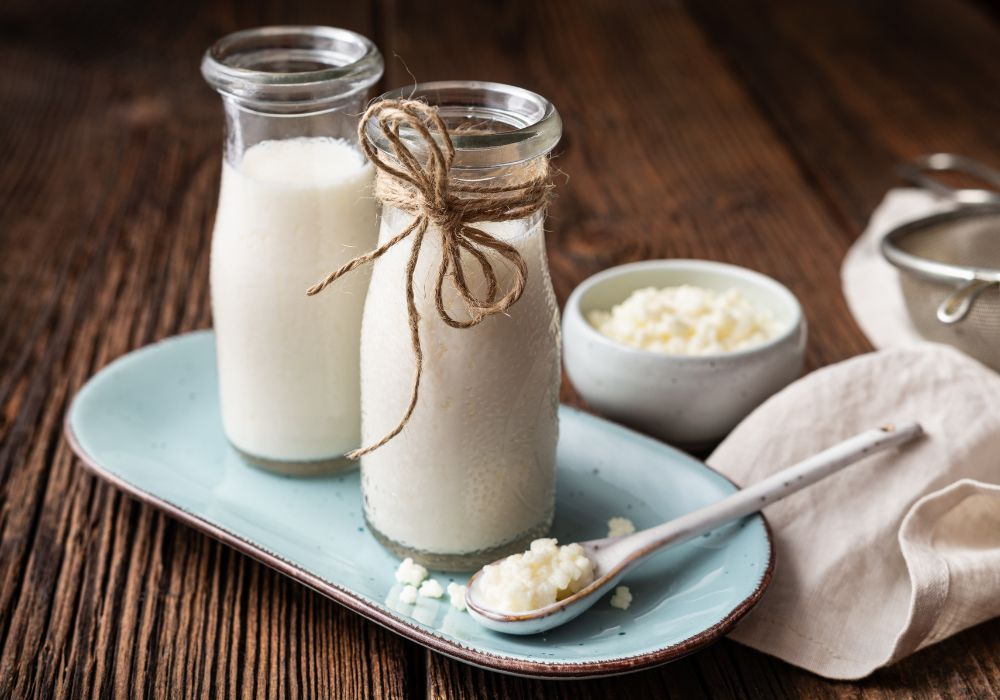
- Fermented foods, incorporated regularly and not as an isolated solution.
- Regular movement, which also influences microbial diversity according to several studies.
- Avoiding unnecessary antibiotic use, which can significantly alter microbial composition.

An Ally Worth Paying Attention to, Without Obsession
The gut microbiome during menopause is a relatively recent field of research, but with solid findings behind it. It’s not a wellness trend or a minor topic: it’s a real part of how your body processes hormones and of your metabolic health over the long term.
This doesn’t mean you need a complex supplement routine or spending money on products that promise to reset your microbiome overnight. The current evidence supports simple, sustained changes — variety in the diet, regular movement, avoiding unnecessary antibiotics — more than quick or costly solutions. The science in this area continues to advance, and it’s likely that more specific recommendations will emerge in the coming years.
You don’t need to become obsessed with your microbiome, but it is worth keeping in mind to better understand what’s happening in your body during this transition. Every small adjustment in your diet isn’t only an aesthetic or digestive decision: it’s also an indirect way of caring for your hormonal balance.
If you are ready to take control and take your first step toward a more conscious and active state of wellbeing, don’t wait any longer. Download our free guide, 5 Keys to Wellbeing in Menopause, and discover simple and effective strategies that will allow you to start feeling better today. The journey toward your new stage begins with information and action.
Affiliate Disclosure: Some resources mentioned in this article may contain affiliate links. If you choose to purchase through them, MenoPawse may earn a small commission at no additional cost to you. We only recommend resources that we believe may provide genuine value to our readers. For more information, please see our Affiliate Disclosure page.
Written by the MenoPawse Editorial Team and medically reviewed by Dr. Nestor Claveria Centurion.
The information in this article is strictly for educational purposes and does not replace the consultation, diagnosis, or care of a licensed healthcare professional. Always consult your doctor before making any health-related decisions. [See Terms and Conditions of Use]