Do you prefer to listen?
Here’s the audio version:
Few recommendations come up as consistently during this stage as this one: exercise. And few generate as much resistance, or as much confusion about what doing it well actually means.
Physical exercise during menopause isn’t the same as exercise at other life stages. Not because the body has broken down, but because its needs have changed. What worked before may no longer be enough, or may no longer be the most appropriate approach.
This article doesn’t propose routines or training plans. It proposes something that comes before those: understanding why movement matters so much at this stage, what the evidence says about each type of exercise, and how to find a starting point that makes sense for the body and the real life you have today.
Why Physical Exercise During Menopause Has Different Effects
The drop in estrogen that defines menopause affects many of the body’s systems simultaneously: metabolism, muscle mass, bone density, mood, sleep, the stress response. Physical exercise during menopause, when well-directed, can intervene in all of them.
This isn’t a metaphor. When you contract a muscle with a certain level of intensity, your muscle fibers release substances called myokines, chemical signals with anti-inflammatory effects that protect bone, improve insulin sensitivity, and act directly on the central nervous system. Muscle isn’t just tissue that moves the body: it’s an active endocrine organ.
A systematic review published in 2024 analyzing strength training for postmenopausal women found significant improvements in leg and pelvic floor strength, physical activity, bone density, and metabolic and hormonal markers.
This doesn’t mean exercise replaces medical treatment when that’s needed. But it is part of the environment that genuinely supports wellbeing during this stage.
What Types of Physical Exercise During Menopause Have the Most Evidence
Not all movement has the same effect. The evidence distinguishes between different types of exercise and their specific benefits.
Resistance Training: The Most Underestimated
We’ve covered this, but it’s worth revisiting because resistance training remains the most overlooked type of exercise among menopausal women, and the one with the broadest range of benefits.
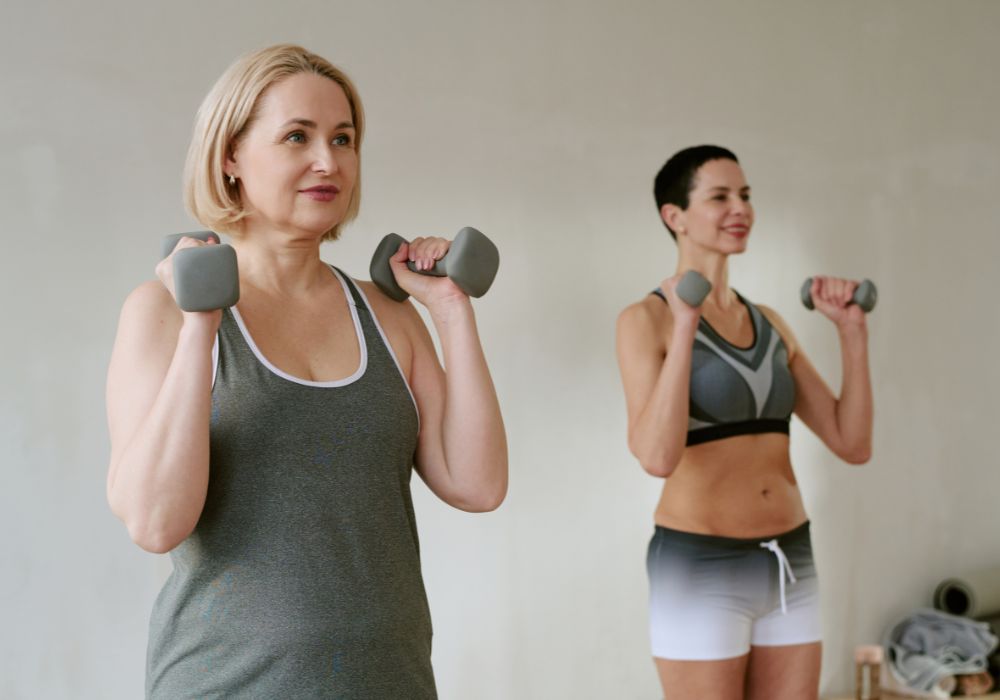
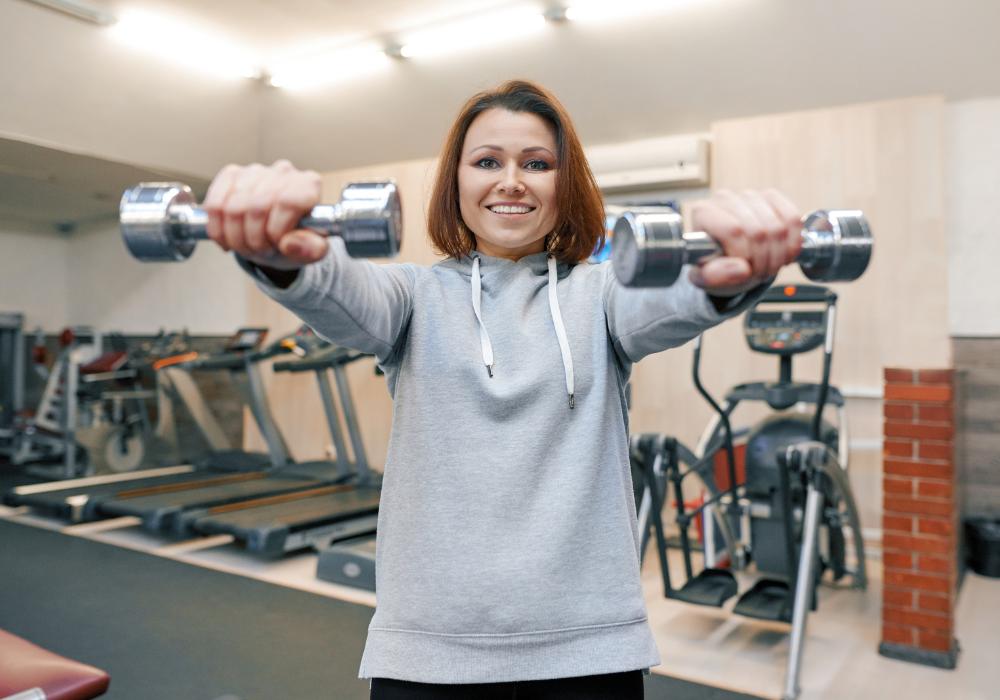
Resistance training — with body weight, dumbbells, resistance bands, or machines — directly stimulates muscle synthesis and bone density. It also improves insulin sensitivity and helps reduce visceral abdominal fat, which tends to increase with falling estrogen levels.
Two or three weekly sessions of 30 to 45 minutes can be enough to generate real changes. The most important factors are gradual progression and consistency, not intensity from the start.
If you want to go deeper into the science of exercise and the menopausal body, Dr. Stacy Sims’s Next Level is one of the most evidence-based and practical guides available specifically for women at this stage. Her work on how women’s physiology responds differently to training — especially during hormonal transitions — is both rigorous and genuinely useful.
Aerobic Exercise: Necessary, But Not Sufficient Alone
Walking, swimming, cycling, dancing: all of these have positive effects on cardiovascular health, mood, and sleep during menopause. The SWAN study — one of the most comprehensive longitudinal studies on the menopausal transition — indicates that staying physically active can help improve sleep quality, reduce insomnia, and support deeper rest.
However, cardio alone is not enough to maintain muscle mass or protect bones. Its ideal place is in combination with resistance training, not as a substitute.
Flexibility, Balance, and Impact Exercise: The Forgotten Three
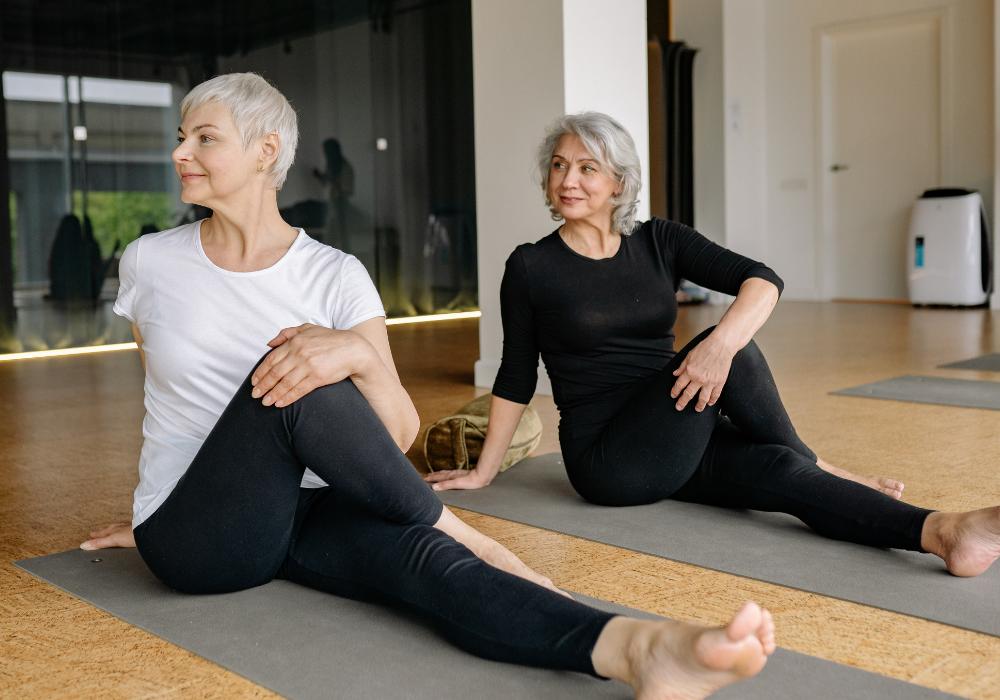
As menopause progresses, joint mobility can decrease, and the risk of falls increases. Flexibility exercises — stretching, yoga, Pilates — and balance work — such as tai chi — improve daily functional capacity and reduce fall risk.
They don’t eliminate hot flashes, but they meaningfully improve quality of life and are accessible to most women regardless of their current fitness level.
Then there’s impact exercise, perhaps the most misunderstood of all, because the word impact immediately makes many women think of sore knees and hips. But impact is precisely one of the most effective stimuli for maintaining bone density. Bone responds to mechanical stress by strengthening. Without that stimulus, it weakens progressively.
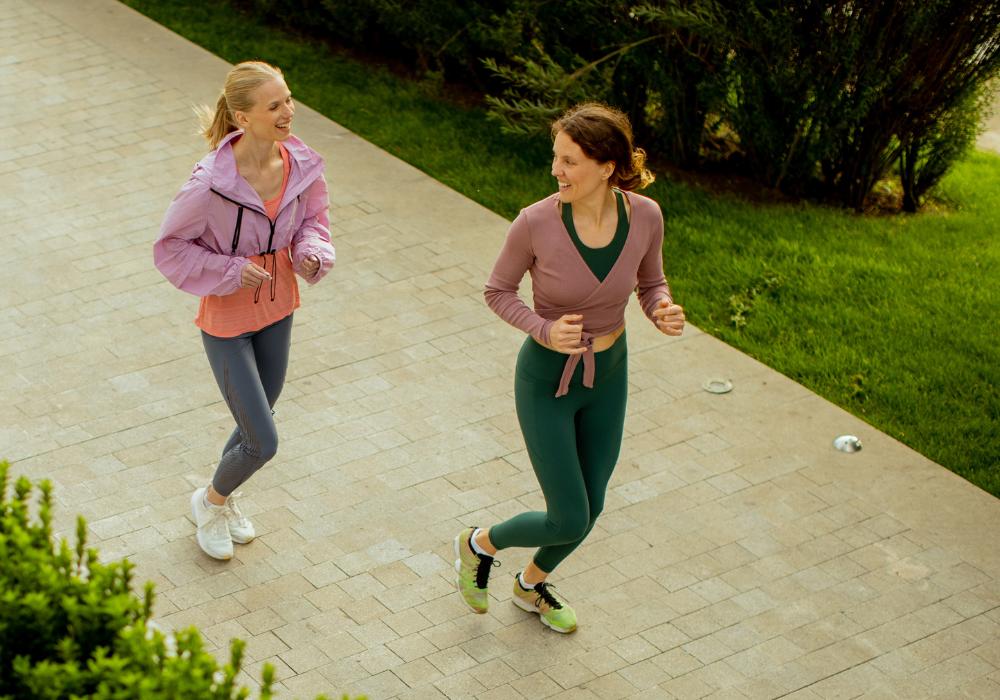
Plyometric and weight-bearing exercises — brisk walking, stair climbing, dancing, light jogging, jumping rope — can help slow the bone loss associated with menopause. This doesn’t mean every menopausal woman should start running.
If there is diagnosed osteoporosis, joint problems, or pelvic floor issues, the type and intensity of impact must be adapted with professional guidance. But eliminating impact entirely, out of caution, can be exactly the opposite of what the bone needs.
Physical Exercise During Menopause and Symptoms: What to Expect
A frequent question is whether exercise reduces hot flashes. The honest answer is: it depends.
Evidence for vasomotor and psychological symptoms following aerobic exercise was inconclusive, although there were some examples of beneficial effects on total and vasomotor symptoms. What is clearer is that exercise improves the subjective perception of wellbeing, reduces anxiety, and improves sleep, which makes hot flashes more manageable even if they don’t disappear.
Where the evidence is consistent is in other symptoms:
- Insomnia responds well to regular exercise, especially when practiced in the morning or midday. Intense evening exercise can have the opposite effect in some women, activating the nervous system when it should be winding down.
- Anxiety and mood improve with regular aerobic exercise in a well-documented way. Relaxation techniques and mindfulness — while not exercise in a strict sense — complement this effect well.
- Bone density is perhaps the area where the benefit of physical exercise during menopause is clearest and most urgent: without regular mechanical stimulus, bone weakens progressively.
What Gets in the Way, and How to Think About It Differently
There are real barriers to exercise during this stage: fatigue, joint pain, lack of time, the feeling of not knowing where to start after years of being sedentary. All of them are valid. None of them are permanent.
The most common mistake is thinking that physical exercise during menopause needs to be done in large amounts or perfectly to be worth anything. The evidence says the opposite: the biggest jump in benefits comes from moving from nothing to something. That first step is the most important one.
Starting with ten minutes of walking is starting. Doing two sets of body-weight squats is starting. The body responds well to stimulus when given time and gradual progression. At any age.
And if joint pain is a real barrier, movement in water — swimming or aqua aerobics — reduces the load on joints while maintaining the benefits of both aerobic and resistance exercise.
Physical Exercise During Menopause as a Practice, Not an Obligation
Moving your body during menopause isn’t a punishment or an outstanding debt to your health. It’s one of the few tools backed by real evidence, accessible, without serious side effects, and with benefits that go well beyond the scale.
It’s not about reclaiming the body you had ten years ago. It’s about caring for the one you have today, with its new conditions, so it serves you well in the years ahead.
Finding the type of movement that generates something close to pleasure — or at least satisfaction — is part of finding a sustainable practice. Because the exercise abandoned after three weeks counts for nothing, however perfect it looked on paper.
The best physical exercise during menopause is the one you do today, and will do again tomorrow, and the day after that, for the rest of your life. For your health.
If you are ready to take control and take your first step toward a more conscious and active state of wellbeing, don’t wait any longer. Download our free guide, 5 Keys to Wellbeing in Menopause, and discover simple and effective strategies that will allow you to start feeling better today. The journey toward your new stage begins with information and action.
Affiliate Disclosure: Some resources mentioned in this article may contain affiliate links. If you choose to purchase through them, MenoPawse may earn a small commission at no additional cost to you. We only recommend resources that we believe may provide genuine value to our readers. For more information, please see our Affiliate Disclosure page.
Written by the MenoPawse Editorial Team and medically reviewed by Dr. Nestor Claveria Centurion.
The information in this article is strictly for educational purposes and does not replace the consultation, diagnosis, or care of a licensed healthcare professional. Always consult your doctor before making any health-related decisions. [See Terms and Conditions of Use]