If you used to recognize her loud calls, restlessness, or insistence on attention, it is natural to wonder what it means when those signs disappear. Perhaps your cat no longer goes into heat, and you are worried that something has changed in her health.
Age can make us watch our pets’ bodies more closely. Still, the absence of visible heat is not enough to conclude that a cat is going through menopause in the human sense. A cat’s reproductive cycles are influenced by other factors, including light and the time of year.
Understanding that difference can help you care for her well while also making room to think about your own stage of life without treating two very different processes as if they were the same.

How a Cat’s Heat Cycle Works
Heat is the part of the reproductive cycle when a female cat can mate. She may seem more restless, vocalize more, rub against people or objects, raise her hindquarters, or move her tail to one side. Some signs are easier to notice than others, and every cat has her own pattern.
A review of normal feline reproduction indexed in PubMed describes cats as seasonal polyestrous animals: they can have several heat cycles during a season and then a non-cycling period. They usually cycle when days are longer, and continuous artificial light can alter that pattern. This is one reason a pause in visible heat can be part of a normal cycle, although its meaning depends on the individual cat and her circumstances.
Why Your Cat No Longer Goes Into Heat
One possible explanation is a seasonal pause. Because light influences feline reproductive activity, a cat no longer goes into heat for a time may resume showing signs later. Artificial light and indoor living can also play a role. A pause alone does not tell us that her reproductive life has ended permanently.
It also matters whether she has been spayed, may be pregnant, or has recently had a litter. Spaying usually stops heat cycles. Pregnancy and other reproductive stages also look different from a cat returning to heat. If you do not know her history, that information can help guide a conversation with a veterinarian.
Age deserves attention, but it is not a universal expiration date. Veterinary sources describe stages and variation in feline cycles rather than one age at which all cats stop going into heat.
If a cat no longer goes into heat or her pattern changes as she gets older, look at the whole picture: her general health, history, and any other signs you have noticed. Across dogs and cats, age-related reproductive changes do not follow the same path as human menopause, and older female dogs can also show changes that are worth noticing.
What to Watch and When to Call the Vet
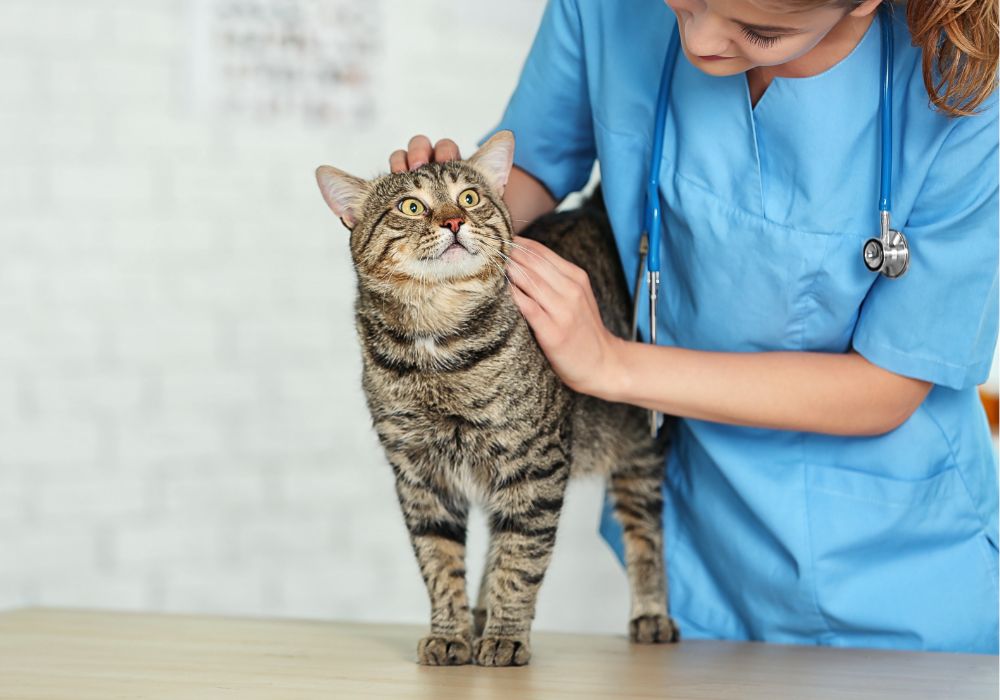
If you are wondering why your cat no longer goes into heat, note when you last saw signs, what you noticed, whether she is spayed, and whether she could have had contact with a male. You do not need a complicated record. A few observations can help explain the change during an appointment. Do not give hormones or medicines to trigger heat without veterinary guidance.
If she otherwise seems well, a few notes over several weeks can be enough. A date, a short description, and any changes in appetite, activity, litter-box habits, or grooming may be more useful than trying to remember everything later.
If your cat no longer goes into heat and also loses her appetite, loses weight, seems unwell, has discharge, or appears to be in pain, contact a veterinary clinic. Those signs do not point to one cause on their own, but they do justify a professional assessment. If the only difference is a pause in heat and she otherwise seems well, a consultation can still help you understand whether it fits her usual pattern.
What This Stage May Bring to Mind About Your Own
Living with an aging cat can bring up questions about changes in your own body. You may recognize the need to pay closer attention, adjust routines, or ask for help when something feels different. That emotional connection is real, even though her cycle does not explain yours.
Sharing a home with her can also invite you to notice changes with curiosity rather than rushing to conclusions. You can write down what you notice, when it began, and how it affects daily life. The same attention can serve you too: bringing specific questions to an appointment can lead to guidance that takes your symptoms, health, and needs into account, because menopause does not unfold in the same way for every woman.

When Your Cat No Longer Goes Into Heat and You Are Going Through Menopause
In women, natural menopause is reached after 12 consecutive months without a menstrual period, following the loss of ovarian follicular function. The World Health Organization explains that the transition can begin gradually with changes in the menstrual cycle and that experiences vary from woman to woman. In a cat, a period without heat may be a seasonal pause or reflect other factors. There is no direct equivalent between the two processes.
The comparison can be a starting point for reflection, not a measure of what you should feel. Caring for her may remind you that bodies change at different rhythms and that paying attention is a form of care. If one of your own symptoms concerns you, it deserves an answer that considers your health, just as your cat’s health deserves appropriate care.
When a cat no longer goes into heat, it does not always mean that something is wrong or that she has reached a feline version of menopause. Watching her, knowing her history, and asking for help when other changes appear can help distinguish a normal pause from something that needs attention.
For you, this stage can be a quiet invitation to listen to your own body with the same patience you give hers.
If you are ready to take control and take your first step toward a more conscious and active state of wellbeing, don’t wait any longer. Download our free guide, 5 Keys to Wellbeing in Menopause, and discover simple and effective strategies that will allow you to start feeling better today. The journey toward your new stage begins with information and action.
Affiliate Disclosure: Some resources mentioned in this article may contain affiliate links. If you choose to purchase through them, MenoPawse may earn a small commission at no additional cost to you. We only recommend resources that we believe may provide genuine value to our readers. For more information, please see our Affiliate Disclosure page.
Written by the MenoPawse Editorial Team and medically reviewed by Dr. Nestor Claveria Centurion.
The information in this article is strictly for educational purposes and does not replace the consultation, diagnosis, or care of a licensed healthcare professional. Always consult your doctor before making any health-related decisions. [See Terms and Conditions of Use]