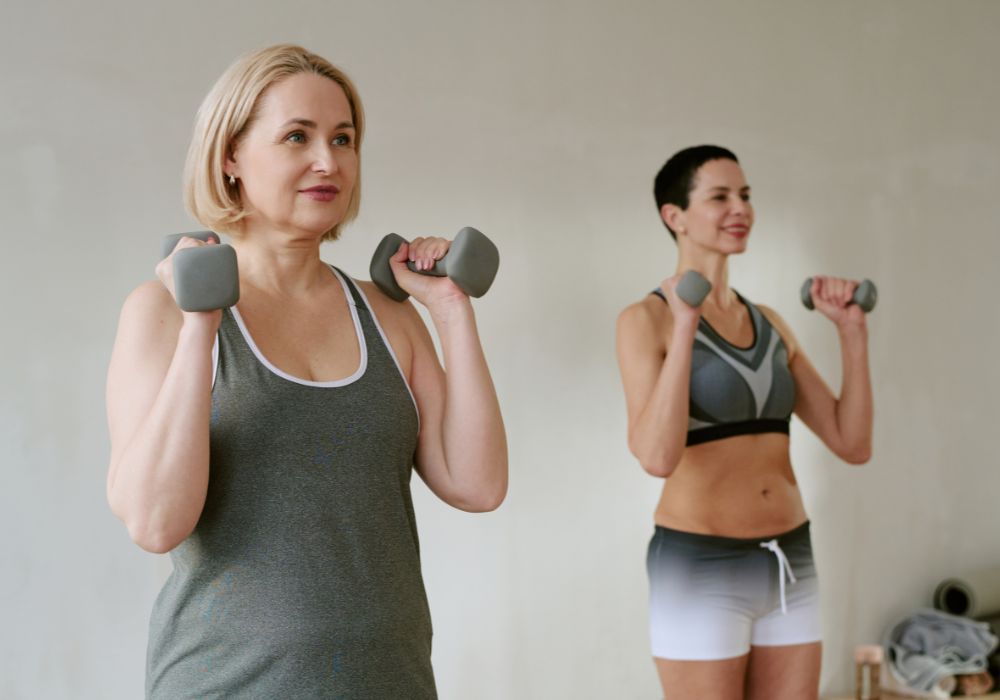
You may have heard that strength training during menopause is important, but still feel unsure where to begin. Perhaps you picture a gym full of machines or think you need to lift heavy weights for it to count.
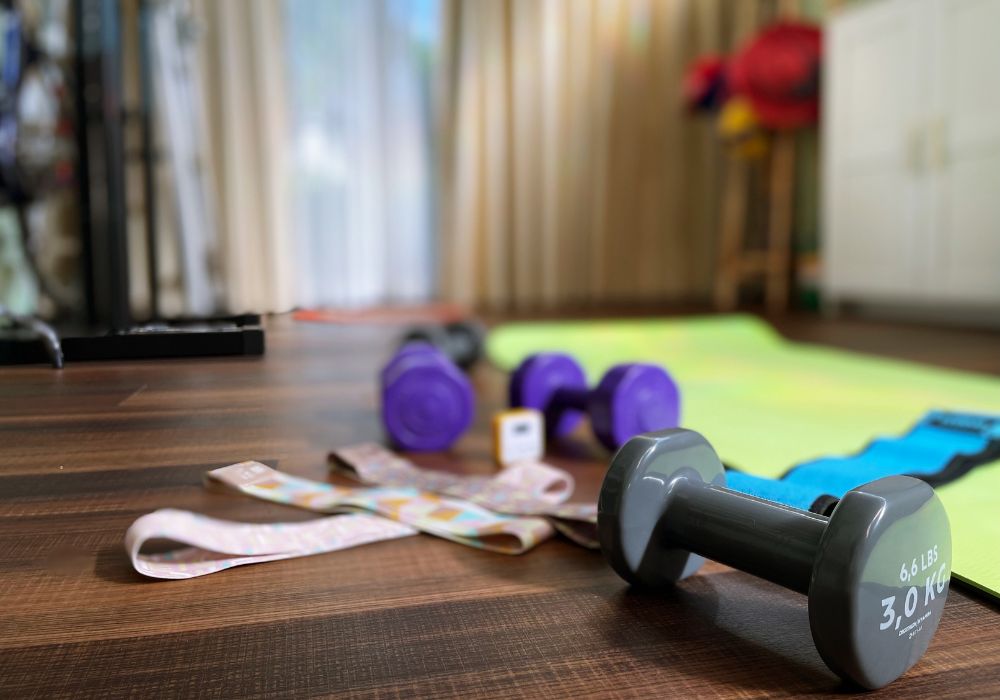
Fortunately, it can be much simpler than that. You can build strength at home with a chair, your own body weight, a resistance band, or dumbbells. What matters is choosing movements that suit you and giving your muscles time to adapt.
This guide offers a general starting point to help you begin calmly and understand how to progress without asking more of your body than it can manage right now.

What Is Strength Training?
Strength exercises are movements in which your muscles work against resistance. That resistance can come from your own body weight, a resistance band, a dumbbell, or a machine.
For example, when you stand up from a chair and sit down again, your legs and glutes work to move your body. A wall push-up works your upper body. Pulling a weight toward you engages muscles in your back and arms.
Walking and other aerobic activities are valuable and can be part of your week. On their own, though, they generally do not provide enough resistance to build muscle and strength. Strength exercises offer a different stimulus, which you can adapt to your experience and the equipment you have available.
Why Practice Strength Training During Menopause?
Muscular strength is involved in movements we often make without thinking: getting out of bed, carrying groceries, or climbing stairs. We can lose muscle mass and strength as we age, and the changes of menopause are part of the context in which this happens.
When you do a strength exercise, your muscles contract to work against resistance. That tension triggers signals inside the muscle fibers. During recovery, your body increases production of proteins that help maintain and build muscle. With regular practice and rest, the fibers can adapt and grow. Your nervous system also learns to activate muscles more effectively, so you can gain strength before you notice visible changes.
If the effort is new or more intense than usual, small changes can occur in the fibers, accompanied by a temporary inflammatory response that helps with repair. That is one reason recovery matters. At the same time, a review of muscle responses to resistance training explains that muscle damage is not essential for adaptation: you do not need to feel sore to make progress.
Training can help counteract and even reverse the loss of muscle mass and strength at any stage of life. A review of strength training in women during menopause found improvements in muscle strength and other health measures.
Your bones receive part of that stimulus too. Bone is living tissue that is continually renewed: some cells remove old tissue while others form new bone. When your muscles contract, they pull on your bones and place a load on them. Certain bone cells sense that load and send signals involved in regulating the renewal process.
This response deserves attention during menopause because lower estrogen levels can accelerate bone loss. Research in postmenopausal women has found that exercise programs can help maintain or improve bone density, although the programs studied have included different types of movement, sometimes in combination.
Another review focused on the menopause transition and early postmenopause also observed bone health benefits from some strength training and walking programs. Results depend on the exercise and each woman’s circumstances. Training takes time, and it does not replace osteoporosis treatment when treatment is needed.
Strength Training During Menopause: A Simple Way to Start
If you have never trained before, begin by learning a few basic movements. You can try them without weights and use a chair or wall for support.
Before you begin, consider your health, experience, and any pain or limitations. A qualified trainer can help you assess your starting point, learn good technique, and develop a plan suited to you. If you have a health condition or are unsure which movements are safe, speak with a healthcare professional too.
- Sit down and stand up from a chair: This primarily works your legs and glutes. Use a stable chair and hold on to support if you need it.
- Wall push-ups: Place your hands on a wall, bend your elbows, then push back. Move your feet closer to or farther from the wall to adjust the difficulty.
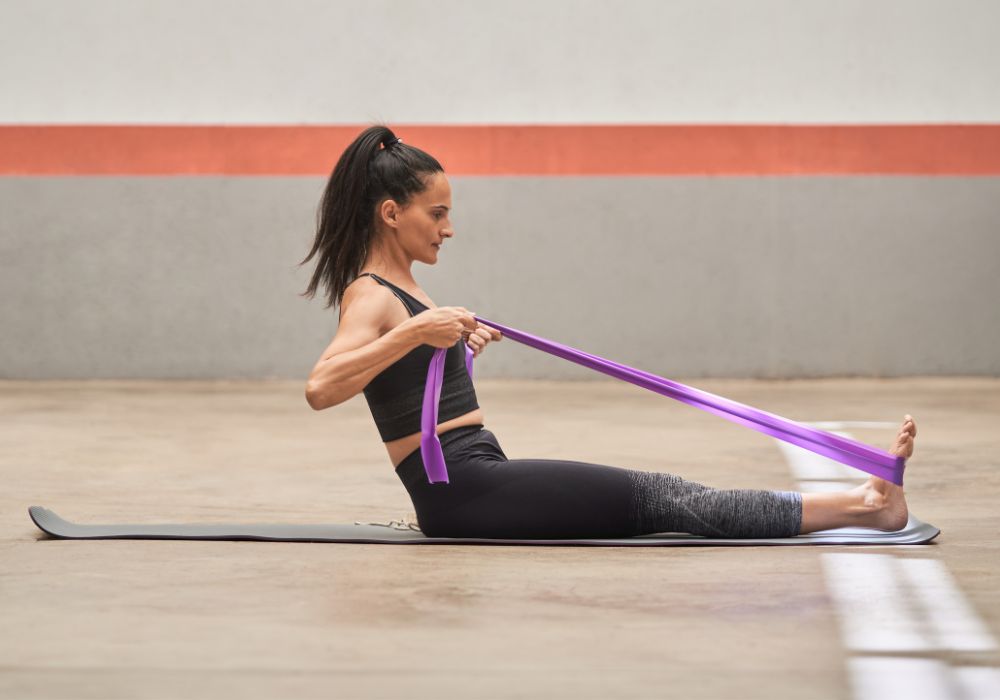
- Row with a band or light weight: Without rounding your spine, extend your arms, then draw your elbows back in a controlled movement to work your back.
- Glute bridge: Lie on your back with your knees bent and feet on the floor. Lift and lower your hips through a comfortable range.
These examples help you become familiar with movements; they are not a routine you have to complete at all costs. If one causes pain, do not force it. An exercise professional or physical therapist can help you adapt it.
At first, you might do a few repetitions of each movement, rest, and notice how you feel. Learning to control the movement is more useful than rushing to lift heavier weights or complete more repetitions.
How Often Should You Train, and How Much Weight Do You Need?
As general guidance for adults, the World Health Organization recommends muscle-strengthening activities involving the major muscle groups at least two days a week. This is general advice, not a requirement to begin there if it feels like too much right now.
You could start with a short session and, once it feels more familiar, add another on a different day. Allow time to recover between sessions that work the same muscles.
Choose a resistance that feels challenging while still allowing you to control the movement and breathe normally. If you finish feeling as though you could continue indefinitely, you may be ready to increase the difficulty a little. If you lose control or hold your breath to finish, reduce the resistance.
How Can You Tell You Are Making Progress?
The scale is not the best measure of everything that changes. Perhaps you notice that getting up from a chair or the floor is easier, a grocery bag feels more comfortable to carry, or you need less support during a movement.
When an exercise becomes easier, you can progress in different ways: add a few repetitions, use a little more resistance, or choose a more challenging variation. Change one thing at a time and notice how you respond.
There will also be weeks when you sleep poorly or have less energy. Adjusting a session, doing less, or resting can help you maintain a kinder, more sustainable relationship with exercise. Consistency over time matters more than intensity.
When Is It Helpful to Ask for Guidance?
If you have osteoporosis, a previous fracture, persistent pain, a cardiovascular condition, or another health concern that could affect your training, speak with a healthcare professional before increasing the intensity. They can help you choose movements and loads suited to you.
During exercise, stop and seek medical attention if you experience chest pain, severe dizziness, or unusual shortness of breath. If you notice urine leakage, a feeling of heaviness in your pelvis, or pain when you train, a physical therapist specializing in pelvic floor health can help.
Starting at Your Own Pace Matters Too
Strength training during menopause can begin with simple movements and grow with you. The goal is to find a way to train that you can sustain and that helps you feel more capable in everyday life.
At first, you may need to try different movements, seek guidance, or adjust your plan to your energy and schedule. All of that is part of the process. With time and practice, you can learn more about what your body can do and find a way to care for it that makes sense for you.
If you are ready to take control and take your first step toward a more conscious and active state of wellbeing, don’t wait any longer. Download our free guide, 5 Keys to Wellbeing in Menopause, and discover simple and effective strategies that will allow you to start feeling better today. The journey toward your new stage begins with information and action.
Affiliate Disclosure: Some resources mentioned in this article may contain affiliate links. If you choose to purchase through them, MenoPawse may earn a small commission at no additional cost to you. We only recommend resources that we believe may provide genuine value to our readers. For more information, please see our Affiliate Disclosure page.
Written by the MenoPawse Editorial Team and medically reviewed by Dr. Nestor Claveria Centurion.
The information in this article is strictly for educational purposes and does not replace the consultation, diagnosis, or care of a licensed healthcare professional. Always consult your doctor before making any health-related decisions. [See Terms and Conditions of Use]