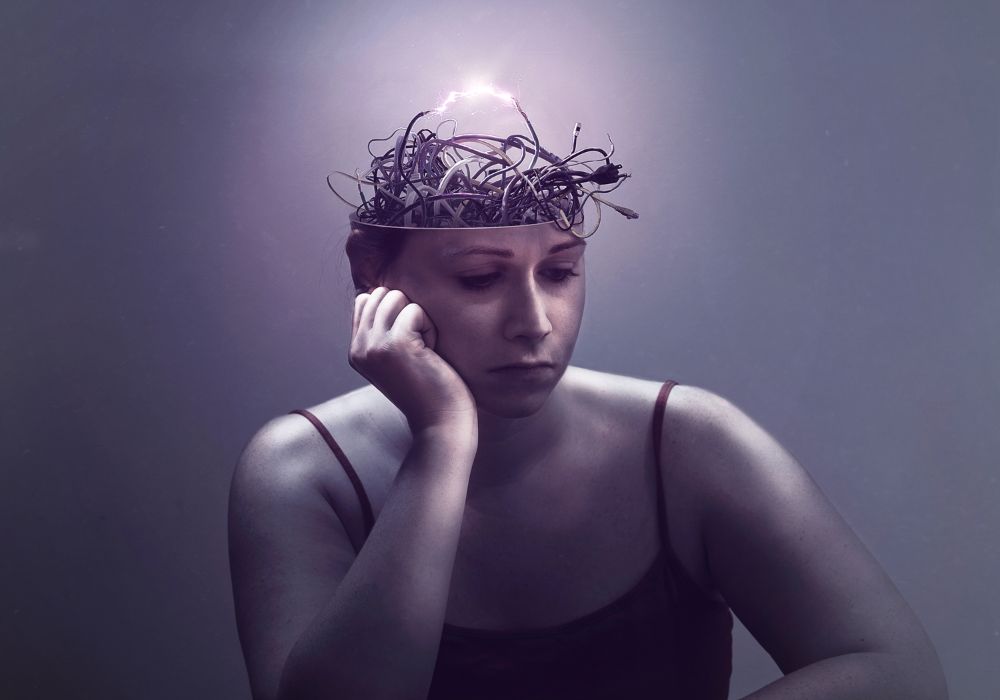
At some point during this stage, you may notice that sadness takes longer to lift. That exhaustion doesn’t go away even after sleeping. That things you used to care about now feel distant, or that finding reasons to get through the day requires more effort than it ever did before.
Sometimes there’s a clear reason. Sometimes there isn’t.
And in that confusion, a question can surface: Am I depressed?
Depression during menopause is more common than is publicly acknowledged. Yet many women don’t talk about what they’re feeling.
This article won’t make diagnoses. But it will offer clarity, and perhaps some relief, to those who need it.

Why Menopause Increases Vulnerability to Depression
To understand depression during menopause, it helps first to understand what role estrogen plays in the brain, beyond the reproductive system.
Estrogen actively participates in regulating neurotransmitters like serotonin and dopamine, both of which are fundamental to mood, motivation, and the overall sense of wellbeing. When estrogen levels fall, that regulation becomes unstable.
Mood disorders, including anxiety and depression, are common during this transition and affect up to one-third of women going through menopause, according to a review published in 2023.
But biology doesn’t act alone. Menopause often coincides with a convergence of life pressures that can add significant emotional weight: children leaving home, caring for aging parents, shifts in partnerships, changes in professional or personal identity. None of these factors causes depression on their own, but their confluence during a period of heightened neurobiological vulnerability can be significant.
Vulnerability to depression isn’t uniform across this entire transition. Research suggests that the period of greatest risk coincides with perimenopause, the phase of most intense hormonal fluctuation, before levels stabilize definitively. Once through that transition, many women describe a gradual improvement in their emotional state.
Sadness, Vital Grief, and Depression: Three Different Things
One of the most common confusions during this stage is interpreting all emotional distress as depression; or, conversely, dismissing signals that genuinely deserve attention.
It’s worth distinguishing between three experiences that can resemble each other but are not the same.
Sadness is a transient emotion, proportionate to a specific circumstance. It appears, makes sense in context, and passes. It doesn’t prevent functioning, though it can weigh heavily.
Vital grief is something deeper and more sustained. Menopause can bring real losses: fertility, a phase of life, a self-image that no longer fits. Processing that grief takes time, and it isn’t pathology. It’s a legitimate human experience.
Depression differs in its intensity and duration. While grief is a process that moves through and eventually improves, depression tends to last longer and produces feelings more intense enough to have a more serious impact on daily functioning. It doesn’t respond to specific circumstances, doesn’t ease on its own without support, and significantly affects the capacity to function, rest, connect with others, and find meaning in everyday life.
Recognizing which of these three territories you’re in isn’t always easy. And you don’t have to figure it out alone.

Signs That Deserve Attention
Without intending to create a list that generates alarm, there are some experiences that — when they persist for more than two weeks and affect daily life — are worth discussing with a professional:
- Persistent sadness that doesn’t lift even in good moments.
- Loss of interest in things that used to matter.
- Deep fatigue that doesn’t improve with rest.
- Difficulty concentrating or making decisions.
- Significant changes in appetite or sleep.
- A sense of emptiness, worthlessness, or hopelessness.
- And in more serious cases, thoughts of self-harm.
If several of these resonate with you on a sustained basis, seeking professional support isn’t overreacting. It’s self-care.
Depression During Menopause: What Can Help
Depression during menopause responds well to treatment when it’s addressed appropriately. There’s no single answer, and what works varies from person to person.
Psychological support
Psychotherapy — particularly cognitive behavioral therapy — has solid evidence in treating depression during this stage. It helps identify thought patterns that amplify distress and build more stable internal resources. Interpersonal therapy has also shown strong results, especially when depression is linked to grief or relational changes.
If you’d like to better understand what’s happening in your brain during this transition — including the neurological basis for mood changes and depression during menopause — Dr. Lisa Mosconi’s The Menopause Brain offers a rigorous, accessible, and genuinely empowering read.
Medical treatment when necessary
In some cases, pharmacological support is part of the treatment plan. This is a decision to make together with a healthcare professional, taking the full picture into account.
Hormone therapy may complement treatment in certain situations by improving menopausal symptoms that indirectly contribute to depression, but it doesn’t replace antidepressant treatment when a depressive episode is already established.
Habits that support wellbeing
Regular physical movement, rest, nutrition that supports the nervous system, and social connection are not alternatives to professional treatment when it’s needed. But they are part of the environment that sustains it and make a real difference in daily wellbeing.
Reducing isolation
One of depression’s characteristics is that it creates an impulse to withdraw, precisely when connection is most needed.
Naming what you’re living through, even to just one trusted person, may be the most important first step.

What Doesn’t Help: Silence and Self-Demand
Two things tend to unnecessarily prolong suffering during this stage.
The first is silence. Believing that what you feel is exaggerated, that you should be able to handle it alone, that others have bigger problems. That internal judgment doesn’t protect. It only isolates.
The second is self-demand. Expecting everything to function as it did before, at a moment when both body and mind are navigating a real transition, is asking too much of the system. Depression during menopause is not a sign of weakness. It’s a sign that something needs attention.
And attending to yourself isn’t giving up. It’s exactly the opposite.
A Final Note on Depression During Menopause
If what you’ve read here resonates, don’t let it pass.
Not because there’s reason to panic, but because emotional wellbeing deserves the same attention as any other aspect of health. And because depression during menopause, when addressed in time and with adequate support, carries a genuinely good prognosis.
What you’re feeling says nothing about your strength or your capacity to move forward. It says the system is under pressure and that this pressure deserves real attention.
Asking for help right now isn’t surrendering. It’s the most coherent thing you can do with what you’re living through.
If you are ready to take control and take your first step toward a more conscious and active state of wellbeing, don’t wait any longer. Download our free guide, 5 Keys to Wellbeing in Menopause, and discover simple and effective strategies that will allow you to start feeling better today. The journey toward your new stage begins with information and action.
Affiliate Disclosure: Some resources mentioned in this article may contain affiliate links. If you choose to purchase through them, MenoPawse may earn a small commission at no additional cost to you. We only recommend resources that we believe may provide genuine value to our readers. For more information, please see our Affiliate Disclosure page.
Written by the MenoPawse Editorial Team and medically reviewed by Dr. Nestor Claveria Centurion.
The information in this article is strictly for educational purposes and does not replace the consultation, diagnosis, or care of a licensed healthcare professional. Always consult your doctor before making any health-related decisions. [See Terms and Conditions of Use]