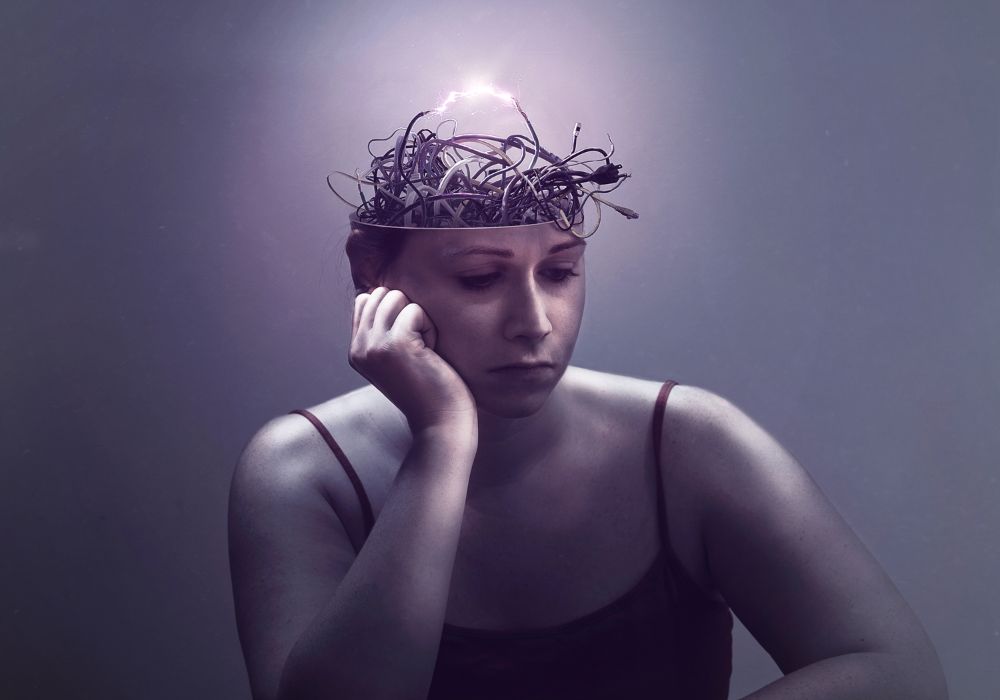
If you’ve been sleeping worse lately, feeling more irritable than usual, or noticing an unease that wasn’t there before, chances are you’ve been looking for answers in estrogen. It’s the name that comes up most often when menopause is discussed. But there’s another hormone, less talked about, that tends to start declining much earlier: progesterone. And its drop can explain a good part of what you’re feeling, even before you notice significant changes in your cycles.
Progesterone during menopause, and especially during perimenopause, plays a role that’s rarely explained clearly. It isn’t just the pregnancy hormone, though that’s usually how it gets introduced. It’s also, among other things, the hormone that helps your nervous system calm down.
In these lines, we want to explain what progesterone is, why its decline tends to be one of the first hormonal changes you notice in perimenopause, and what the scientific evidence says about its impact and possible management.
What Progesterone Actually Is
Progesterone is a hormone produced mainly by the ovaries after ovulation. Its best-known function is preparing the uterus for a possible pregnancy. But its reach goes well beyond the reproductive system.
Progesterone also acts on the brain. Once there, it’s converted into a compound called allopregnanolone, which interacts with GABA receptors, the central nervous system’s main inhibitory system. In plain terms: allopregnanolone helps your brain slow down. It acts on the same type of receptor targeted by some anti-anxiety medications, though progesterone does this naturally and endogenously.
So when we talk about progesterone during menopause, we’re not only talking about fertility. We’re talking about a hormone with a direct role in how you sleep, how you handle stress, and how your mood feels from day to day.
Why It Drops Before Estrogen
One of the least-known and most useful facts for understanding this transition is that progesterone typically begins to decline years before estrogen does, even when your cycles still appear regular.
Research led by the Centre for Menstrual Cycle and Ovulation Research (CeMCOR) at the University of British Columbia has documented this phenomenon. The work shows that during perimenopause it’s common for cycles to continue producing sufficient estrogen, while ovulation becomes irregular or inadequate, which reduces progesterone production. In other words: you can still be menstruating with apparent regularity while progesterone is already falling.
This explains why many women begin to notice insomnia, anxiety, or irritability years before they experience symptoms like hot flashes, which are more directly associated with estrogen. Progesterone during menopause, and particularly in the preceding phase, tends to be the first to signal that something is shifting.
How Its Decline Shows Up
The drop in progesterone isn’t always identified as such, because its symptoms resemble those of everyday stress. The most common include:
- Difficulty falling asleep or frequent nighttime waking.
- Greater irritability or more pronounced mood swings.
- A feeling of anxiety that appears without a clear cause.
- Heavier or more irregular menstrual cycles, even when they remain regular in frequency.
- Greater sensitivity to stress in general.
None of this means something is wrong with you. It’s valuable information about what your body is going through.

What the Scientific Evidence Says About Treating It
This is where it’s worth being careful and precise, because information available online tends to mix science with marketing.
A randomized, double-blind, placebo-controlled clinical trial led by the CeMCOR team evaluated four months of oral micronized progesterone use in 189 perimenopausal women with hot flashes and night sweats. The study did not find statistically significant improvement in the overall vasomotor symptom score, which was its primary endpoint.
However, it did find significant results in several important areas: women taking progesterone perceived a real improvement in sleep quality, a reduction in night sweats, and less interference of symptoms in their daily lives, without any increase in depressive symptoms or serious adverse events.
This doesn’t mean progesterone is a universal solution or that you should self-medicate with it. It means there is real scientific evidence, not merely anecdotal, that progesterone during menopause and perimenopause can have a measurable effect on sleep and general wellbeing, and that it’s worth discussing with a healthcare professional if your symptoms are significantly affecting you.
A Realistic Approach, Without Guilt
Understanding the role of progesterone during menopause isn’t just technical information. It’s a way of stopping the interpretation of insomnia or irritability as a character flaw, and beginning to see them for what they are: an identifiable hormonal response.
This doesn’t eliminate the discomfort, but it does change the way you relate to it. Knowing there’s a concrete biological explanation behind those nights when you can’t seem to settle can ease, at least a little, the feeling of losing control.
Your Pet’s Role on the Hard Nights
On those nights when progesterone is low and sleep won’t come, many women find some relief in something as simple as the presence of their pet. Stroking your cat before bed, or simply feeling your dog nearby, doesn’t change your hormone levels, but it can help your nervous system ease down a little before you try to fall asleep.
It isn’t a medical solution. It’s one more sensory pause among the many tools you can add while you come to understand what your body is going through.

When You Give It a Name, Something Changes
The progesterone hormone in perimenopause and menopause is, for many women, the one that starts to quietly fade first. For months, sometimes years, its effects can be mistaken for stress, for your personality, or for simply expecting too much of yourself.
Putting a name to it changes something. Not the symptoms, but the way you see them.
Knowing that insomnia or irritability has a specific hormonal explanation doesn’t make the discomfort go away, but it does lift a layer of guilt that many women carry without even realizing it.
No, you’re not exaggerating. And you’re not alone in what you’re going through.
If you are ready to take control and take your first step toward a more conscious and active state of wellbeing, don’t wait any longer. Download our free guide, 5 Keys to Wellbeing in Menopause, and discover simple and effective strategies that will allow you to start feeling better today. The journey toward your new stage begins with information and action.
Affiliate Disclosure: Some resources mentioned in this article may contain affiliate links. If you choose to purchase through them, MenoPawse may earn a small commission at no additional cost to you. We only recommend resources that we believe may provide genuine value to our readers. For more information, please see our Affiliate Disclosure page.
Written by the MenoPawse Editorial Team and medically reviewed by Dr. Nestor Claveria Centurion.
The information in this article is strictly for educational purposes and does not replace the consultation, diagnosis, or care of a licensed healthcare professional. Always consult your doctor before making any health-related decisions. [See Terms and Conditions of Use]