There are symptoms of midlife that women name without hesitation: hot flashes, insomnia, mood shifts. And then there are others that stay quiet, that get normalized as if they were inevitable, or that simply don’t come up in the doctor’s office, out of not knowing or not daring.
What happens to the pelvic floor during menopause often falls into that second category.
The small leaks when laughing or jumping. The sense of pelvic heaviness at the end of the day. Dryness or discomfort during intimacy. The sudden urgency to reach the bathroom that wasn’t there before. Many women live with these experiences for years without knowing they have a concrete hormonal cause and that there are real ways to address them.

What the Pelvic Floor Is and Why It Matters More Than It Seems
The pelvic floor is a group of muscles, ligaments, and connective tissue that forms the base of the abdominal cavity. It supports the bladder, uterus, and rectum; controls the urinary and anal sphincters; participates in sexual function; and contributes to the stability of the spine and pelvis.
It is not a minor muscle or a secondary structure. It is part of the body’s central support system. And when it weakens, the consequences show up in many aspects of daily life, not only in urinary control.
The pelvic floor during menopause is especially vulnerable because estrogens play a direct role in its maintenance. The connective tissues of the pelvic floor have less collagen after menopause, making them less elastic. These stiffer tissues don’t recover their shape well after exposure to pressure. Estrogens also influence muscle tone and the vascularization of the pelvic area. When their levels fall, the entire system receives less hormonal support.
Why the Pelvic Floor During Menopause Changes
As estrogen levels decline during perimenopause, the pelvic floor tissues may weaken and lose their elasticity, which can cause the pelvic organs to descend. Estrogen loss can also cause thinning of the vaginal walls and reduced lubrication.
Two additional factors compound this. First, the general loss of muscle mass that accompanies menopause also affects pelvic musculature. Some studies indicate that the thickness of the muscle that closes the urethra decreases by approximately 3% per year in older women. Second, the supportive collagen tissue that gives structure to the pelvic ligaments and fascias also deteriorates with the fall of estrogen.
The result is a zone with less strength, less elasticity, and less capacity to respond to increases in abdominal pressure: when coughing, sneezing, jumping, or laughing.
What Many Women Notice, and Rarely Mention
The symptoms related to the pelvic floor during menopause vary and don’t always appear together:
- Stress urinary incontinence: leaks when coughing, laughing, sneezing, or exercising. It is the most common symptom and the one most women normalize as something that just happens with age.
- Urinary urgency: a sudden, intense need to urinate that is sometimes difficult to control. It can combine with leaks: what is known as mixed incontinence.
- Vaginal dryness and discomfort during intimacy: the atrophy of the vaginal mucosa that accompanies falling estrogen levels can cause itching, burning, pain during sex, and recurrent vaginal or urinary infections.
- A sensation of heaviness or pelvic pressure: this can indicate a descent of one of the pelvic organs. It doesn’t always mean a serious prolapse, but it does warrant professional evaluation.
- Difficulty controlling gas or stool: less common, but also connected to pelvic floor function.
None of these symptoms is inevitable. And none should simply be accepted without addressing them.
What Can Help the Pelvic Floor During Menopause
The good news is that the pelvic floor during menopause responds well to intervention when it’s addressed appropriately and in time.
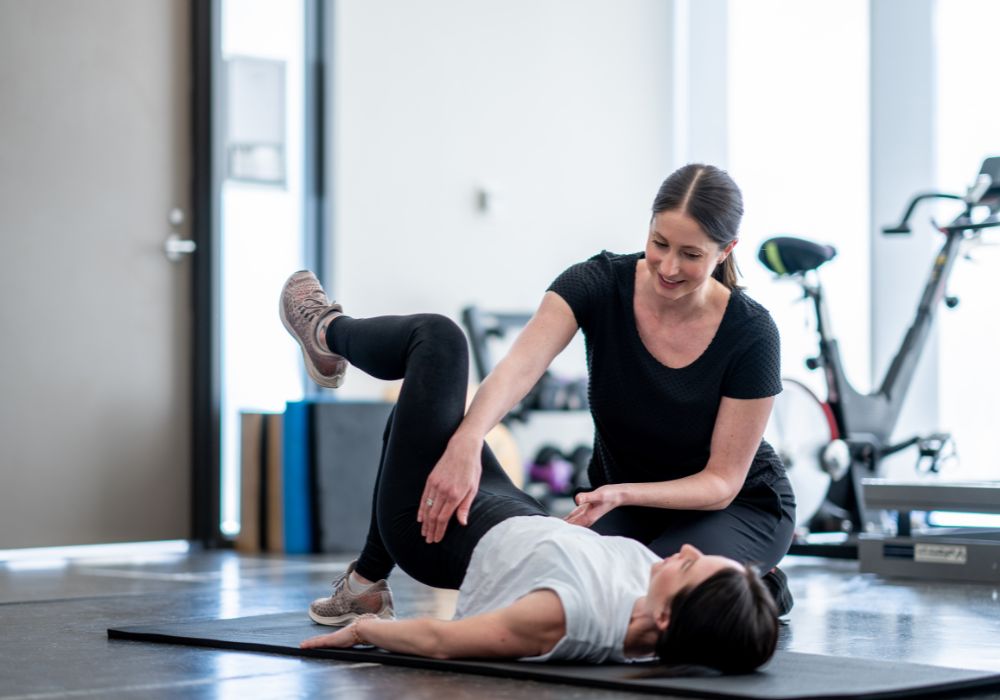
Specialized pelvic floor physiotherapy
This is the most evidence-backed tool and the one that makes the most difference. A specialized physiotherapist can evaluate the actual state of the pelvic musculature and design specific work that doesn’t always mean squeeze harder. In some cases the problem isn’t weakness but hypertonia: a muscle that is too tense to function well.
A systematic review analyzing training interventions in postmenopausal women found that 14 out of 15 studies showed improvement in pelvic floor muscle function related to urinary incontinence. Doing Kegel exercises without a prior evaluation may not be the right answer in every case.
If you’d like to understand pelvic floor function more deeply before or between appointments, The Pelvic Floor Bible by physiotherapist Jane Simpson is a clear, practical, and non-alarmist guide that covers exactly what changes during menopause and what you can do about it.
General strength training
As we’ve covered in other articles, strength work preserves muscle mass throughout the body’s entire structure, including the pelvic region.
Exercises like deep squats, deadlifts, and glute bridges indirectly engage the pelvic musculature and support its function.
Habits that reduce pressure on the pelvic floor
Chronic constipation, excess weight, straining during bowel movements, and incorrect lifting technique all increase intra-abdominal pressure repeatedly and accelerate deterioration of the area.
Addressing these is part of caring for the pelvic floor during menopause.
Medical treatments when needed
Local hormone therapy — in the form of a vaginal estrogen cream or ovule — is especially indicated for genitourinary symptoms: dryness, irritation, recurrent infections. It acts locally, with minimal systemic absorption, and has a different safety profile from systemic hormone therapy.
It’s an option many women don’t know about, and one worth discussing with a doctor.
The Silence That Comes at a Cost
There is something telling about how the pelvic floor during menopause is handled in our culture.
It is a structure that affects functions as basic as urinating, defecating, and having sex. When it doesn’t work well, it impacts autonomy, comfort, social life, and self-esteem. And yet it is discussed in low voices, if at all.
Many women wait years before seeking help. Some stop exercising to avoid leaks. Others withdraw from social situations or reduce their sexual lives. All of this carries a real cost to quality of life.
What is common is not always normal. And what is treatable should not simply be accepted.
Pelvic Floor During Menopause: One More Part of the Body That Deserves Attention
Caring for the pelvic floor during menopause is not about vanity or bodily perfectionism. It is part of functional self-care: keeping in good condition the structure that supports vital organs, regulates basic functions, and directly influences daily wellbeing.
There is no need to wait for symptoms to become serious before acting. And there is no need to resign yourself to them once they’re already present.
An evaluation with a specialized physiotherapist can be one of the most useful first steps you take. Not to fix yourself, but to understand what is happening in your body and what you can do about it.
If you are ready to take control and take your first step toward a more conscious and active state of wellbeing, don’t wait any longer. Download our free guide, 5 Keys to Wellbeing in Menopause, and discover simple and effective strategies that will allow you to start feeling better today. The journey toward your new stage begins with information and action.
Affiliate Disclosure: Some resources mentioned in this article may contain affiliate links. If you choose to purchase through them, MenoPawse may earn a small commission at no additional cost to you. We only recommend resources that we believe may provide genuine value to our readers. For more information, please see our Affiliate Disclosure page.
Written by the MenoPawse Editorial Team and medically reviewed by Dr. Nestor Claveria Centurion.
The information in this article is strictly for educational purposes and does not replace the consultation, diagnosis, or care of a licensed healthcare professional. Always consult your doctor before making any health-related decisions. [See Terms and Conditions of Use]